
Marcel Niebuhr
Head of Business Development

Logistics for battery manufacturers: store cells, modules and packs centrally in Paderborn and deliver them under ADR to your customers across Europe.
Logistics for battery manufacturers covers interim storage of finished cells, modules and packs, management of stock and call-offs and ADR-compliant distribution to customers across Europe. The European Battery Hub (EBH) in Paderborn, Germany, delivers this chain from a single source: storage in the hazardous materials warehouse (WGK 3, Class 9 M4), dangerous goods transport to more than 40 countries and customs clearance for imported cells.
Battery manufacturers supply customers in many countries. Production often runs in large batches, while customer demand and call-offs fluctuate. In-house storage space for dangerous goods is tight, and coordinating every shipment individually takes time.
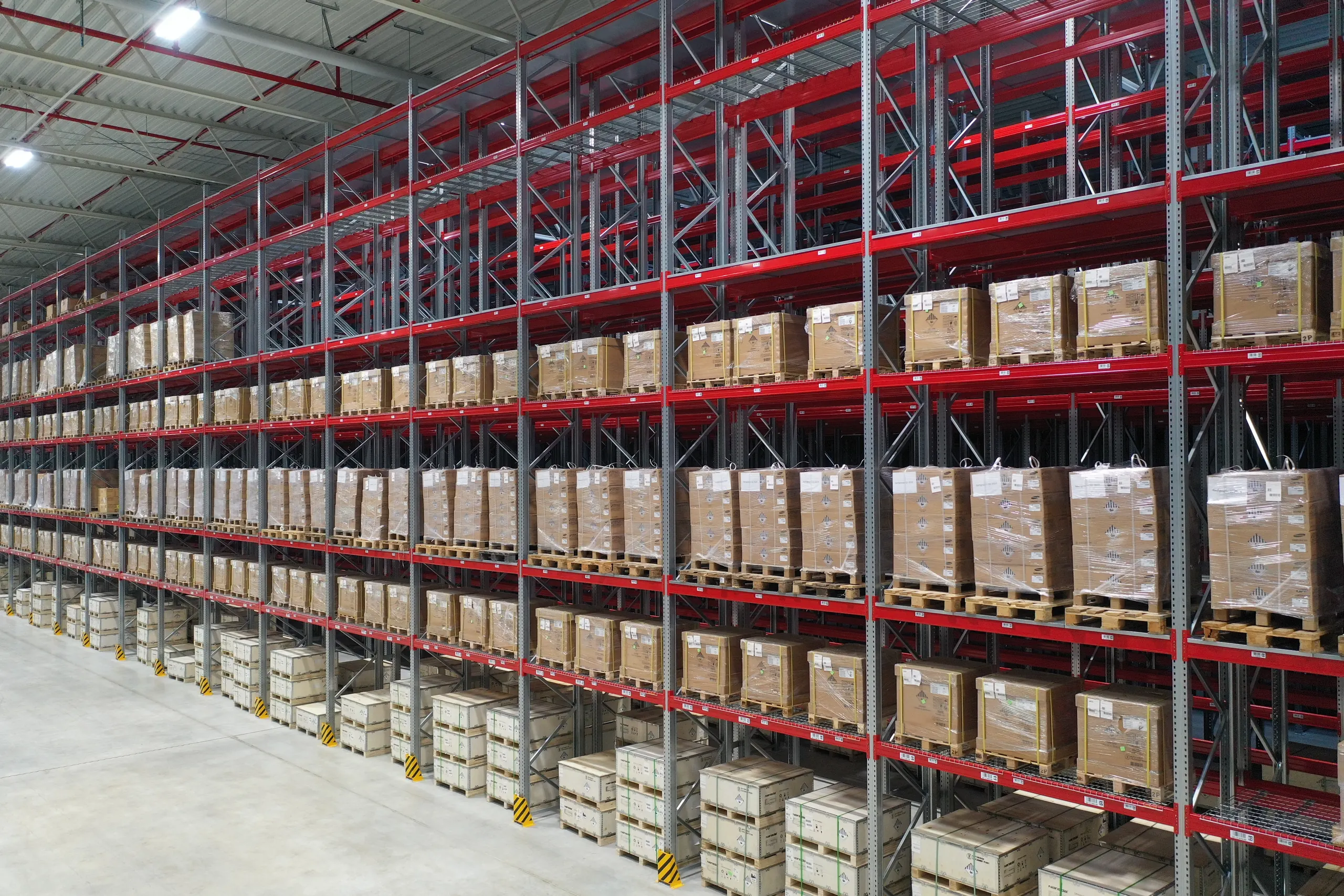
That is why the European Battery Hub takes over the central interim storage of finished cells, modules and packs in the hazardous materials warehouse in Paderborn with 45,000 storage spaces, manages stock and call-offs as needed and bundles shipments into ADR-compliant transports. The case study below shows what this looks like in practice: the central European distribution of a battery manufacturer.
Dangerous goods transport of battery cells and packs (ADR, class 9, UN 3480 and UN 3481) runs with trained personnel to more than 40 countries. For imported cells, our customs service handles clearance and documentation and keeps liquidity flexible through temporary storage; if needed, we apply for a customs warehouse, with 2 to 3 months of lead time. All building blocks at a glance are under battery logistics; if you also supply automakers, see EV battery logistics for automotive manufacturers.
Finished cells, modules and packs stored centrally, called off on demand and consolidated into ADR-compliant shipments.
45,000 storage spaces in the Paderborn hazardous materials warehouse
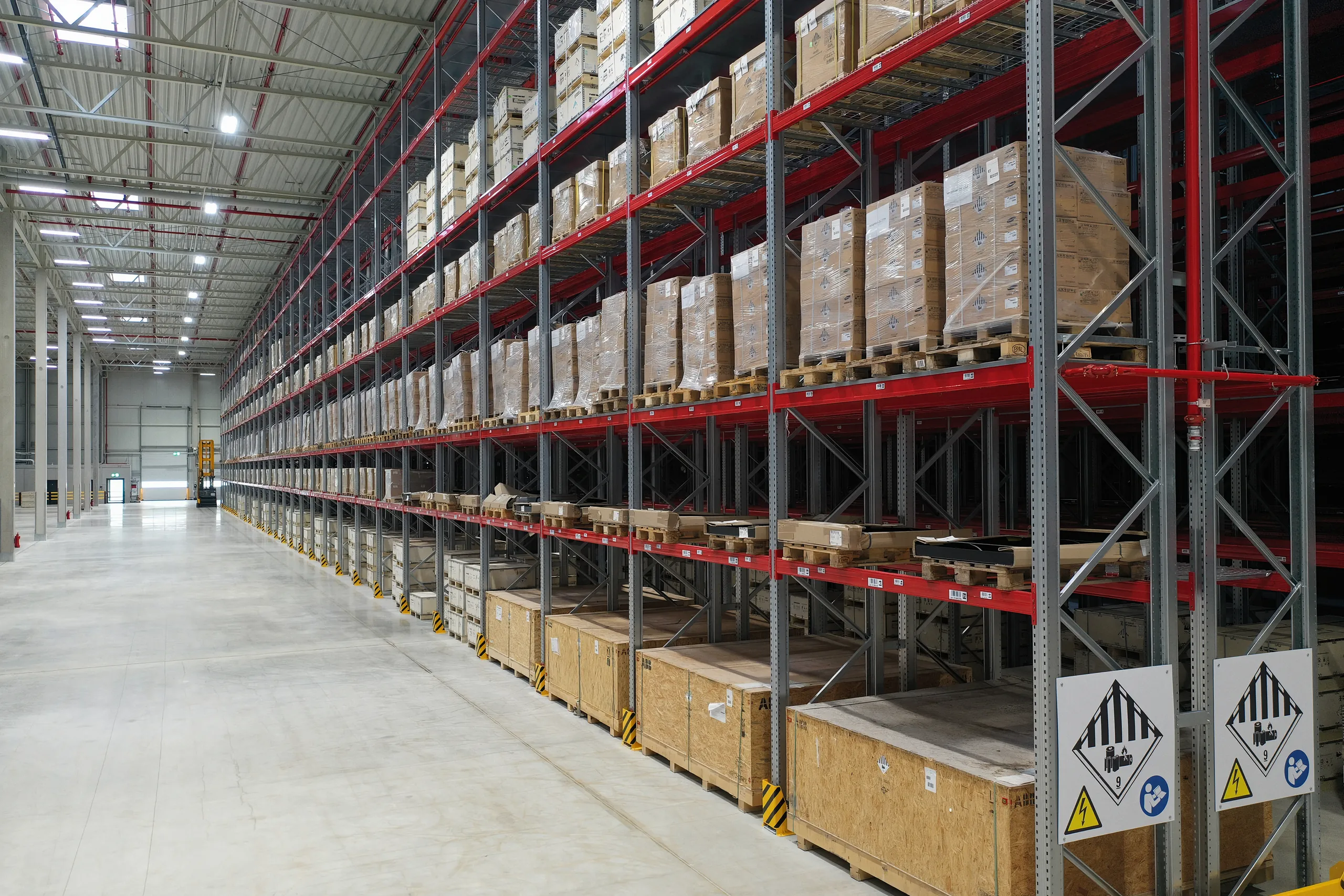
Goods receipt with temperature check at the inbound inspection gate and ADR-compliant storage of cells, modules and packs in the hazardous materials warehouse.
Explore battery logisticsStock management and call-offs as needed, bundling shipments into economical transports.
Transport of class 9 battery cells and packs (UN 3480 and UN 3481) to more than 40 countries, with trained personnel and complete documentation.
Explore dangerous goods transport04Import of cells and modules from Asia and overseas: customs clearance, temporary storage for up to 90 days and, on application, a customs warehouse with a re-export advantage.
Explore customs serviceWhich UN number and rule apply in road transport (ADR) to the typical goods of a battery manufacturer. More under UN 3480 and UN 3481.
| Goods | Classification and rule | Note |
|---|---|---|
| Cells, modules and packs shipped on their own | Class 9, UN 3480, packing instruction P903 | Battery type tested to UN 38.3 |
| Batteries contained in or packed with equipment | Class 9, UN 3481, packing instruction P903 | Battery type tested to UN 38.3 |
| Prototypes and small series without UN 38.3 test | Special provision 310, packing instruction P910 | Small series of up to 100 cells or batteries |
| Scrap, damaged and defective cells | Special provision 376, packing instruction P908, critically defective P911 | Critically defective cells in the battery containment box with BAM specification 15854 |
How a battery manufacturer centralizes its European distribution
The European Battery Hub stores a battery manufacturer's batteries centrally in Paderborn, manages stock and call-offs, and from there supplies customers in several European countries with ADR-compliant transport.
A battery manufacturer supplies customers in several European countries. Production runs in large batches, while customer demand and call-offs fluctuate. In-house storage space is tight, and coordinating every shipment individually takes a lot of effort.
More flexibility in inventory planning, one central logistics partner and supply to European customers that grows with demand.
Want to simplify battery distribution in Europe?Talk to us about your storage and transport requirements.
Request a quoteTalk directly with our business development team.
We will get back to you within 24 hours on business days.
Head of Business Development

Business Development Manager

Business Development Manager
Logistics for battery manufacturers brings together storage and distribution of finished cells, modules and packs: goods receipt with temperature check, interim storage in the hazardous materials warehouse (WGK 3, Class 9, code M4), management of stock and call-offs, and ADR transport to more than 40 countries, as UN 3480 for batteries on their own and UN 3481 for batteries in or packed with equipment. The European Battery Hub delivers this chain from a single source, including customs clearance for imported goods.
Yes, as a project from practice shows: the European Battery Hub stores a battery manufacturer's batteries centrally in Paderborn, manages stock and call-offs as needed, bundles shipments and supplies customers in several European countries with ADR-compliant transports. The manufacturer gains flexibility in stock planning and has one central logistics partner.
Read more: Battery manufacturer case study
Imported cells run through the customs service and the inbound inspection gate at the European Battery Hub: customs clearance and documentation and temporary storage for up to 90 days keep liquidity flexible; if needed, we apply for a customs warehouse with no time limit and a re-export advantage, with 2 to 3 months of lead time. At the inbound inspection gate the batteries are checked for temperature; for transport, the cell type must be tested to UN 38.3, with exceptions for example for prototypes under special provision 310.
Scrap and damaged or defective batteries (DDLB) from production are packed under special provision 376 with packing instruction P908; critically defective cells go into the battery containment box with BAM specification 15854. We arrange their collection and transport directly to recycling through a specialized partner with a permit for waste transport, with records; they are not stored in Paderborn.
For pre-series prototypes and small production runs of no more than 100 cells or batteries before passing the UN 38.3 test, ADR special provision 310 applies, together with packing instruction P910. The cells remain Class 9 dangerous goods (UN 3480 or UN 3481); each cell sits individually in an inner packaging, protected against short circuit. The European Battery Hub coordinates such special cases with the manufacturer's development department and ships them with ADR-trained personnel.
Talk to our team about interim storage, stock and ADR distribution for your cell or pack plant. We respond within 24 hours on business days.