
Marcel Niebuhr
Head of Business Development

E-bike battery logistics from Paderborn: we clear your batteries from Asia through customs and deliver them ADR-compliant to retailers and service partners.
E-bike battery logistics covers the import, customs clearance, storage and distribution of batteries for e-bikes, pedelecs and e-scooters, handled throughout as Class 9 dangerous goods. The European Battery Hub (EBH) in Paderborn, Germany, brings this chain together: customs clearance, storage in a hazardous materials warehouse and ADR transport (UN 3480/UN 3481) to more than 40 countries. We arrange the transport of defective batteries (DDLB) directly to recycling through a specialized partner.
Batteries from e-bikes, e-scooters and other micromobility vehicles are lithium-ion batteries and therefore dangerous goods. Many are produced in Asia. Every step through to recycling is subject to dangerous goods rules.
We handle the import from Asia, including customs clearance.
We store batteries safely in the interim and supply retailers and service partners.
A specialized partner takes defective batteries directly to recycling, not to Paderborn.
From import to transport for recycling, tailored to micromobility batteries.
Import of e-bike and e-scooter batteries from China and Asia, including customs clearance and documentation.
Customs service02Safe interim storage in our hazardous materials warehouse and on-demand supply to retail, e-commerce and service partners.
Battery logistics03ADR-compliant Class 9 transport (UN 3480 and UN 3481) to more than 40 countries, including smaller battery quantities.
Dangerous goods transport04Transport of defective and damaged micromobility batteries (DDLB) directly to recycling through a specialized partner, safely packed and documented, with no storage in Paderborn.
Defective batteries05Handling of critically defective batteries with an emergency response plan and early warning from the thermal imaging drone, which matters most with damaged cells.
Emergency response plan06Onward routing of end-of-life batteries through the recycling and disposal network of our specialized partner, with full documentation.
Reverse logistics
E-bike and e-scooter batteries come in large numbers and many variants. We store them by item number in the hazardous materials warehouse, pick even single units for retail and e-commerce and ship them in line with ADR as Class 9 dangerous goods. Unused returns from retail are checked at the inbound inspection gate before they go back into stock. We do not store used or damaged batteries; we arrange their collection and transport to the recycler through a specialized partner.
The typical path of an e-bike battery through EBH logistics.
Batteries arrive from China and Asia. We handle customs clearance and manage the dangerous goods documentation.
A temperature check at goods receipt catches damaged or abnormal batteries early, before they reach the warehouse.
Safe interim storage in the hazardous materials warehouse, with FM Global sprinklers and temperature monitoring by the thermal imaging drone.
On-demand supply to retail, e-commerce and service partners in more than 40 countries, ADR-compliant and even in smaller quantities.
Our specialized partner takes defective or end-of-life batteries directly to recycling under ADR, through its recycling and disposal network. They do not come to Paderborn.
Overview for road transport under ADR; in each case, the classification by the consignor is binding. More on UN 3480 and UN 3481 and on defective batteries.
| What is shipped? | Classification | Rule |
|---|---|---|
| Spare battery on its own | Class 9, UN 3480 | Packing instruction P903, battery type tested to UN 38.3 |
| Battery packed with or contained in equipment | Class 9, UN 3481 | Packing instruction P903 |
| E-bike or e-scooter with built-in battery | Vehicle, UN 3556 | Special provision 388; exemption under conditions of special provision 666 |
| Damaged or defective battery | Class 9, UN 3480 or UN 3481 | Special provision 376, packing instruction P908, critically defective P911, no air transport |
| Battery for disposal or recycling | Class 9, UN 3480 or UN 3481 | Special provision 377, packing instruction P909 |
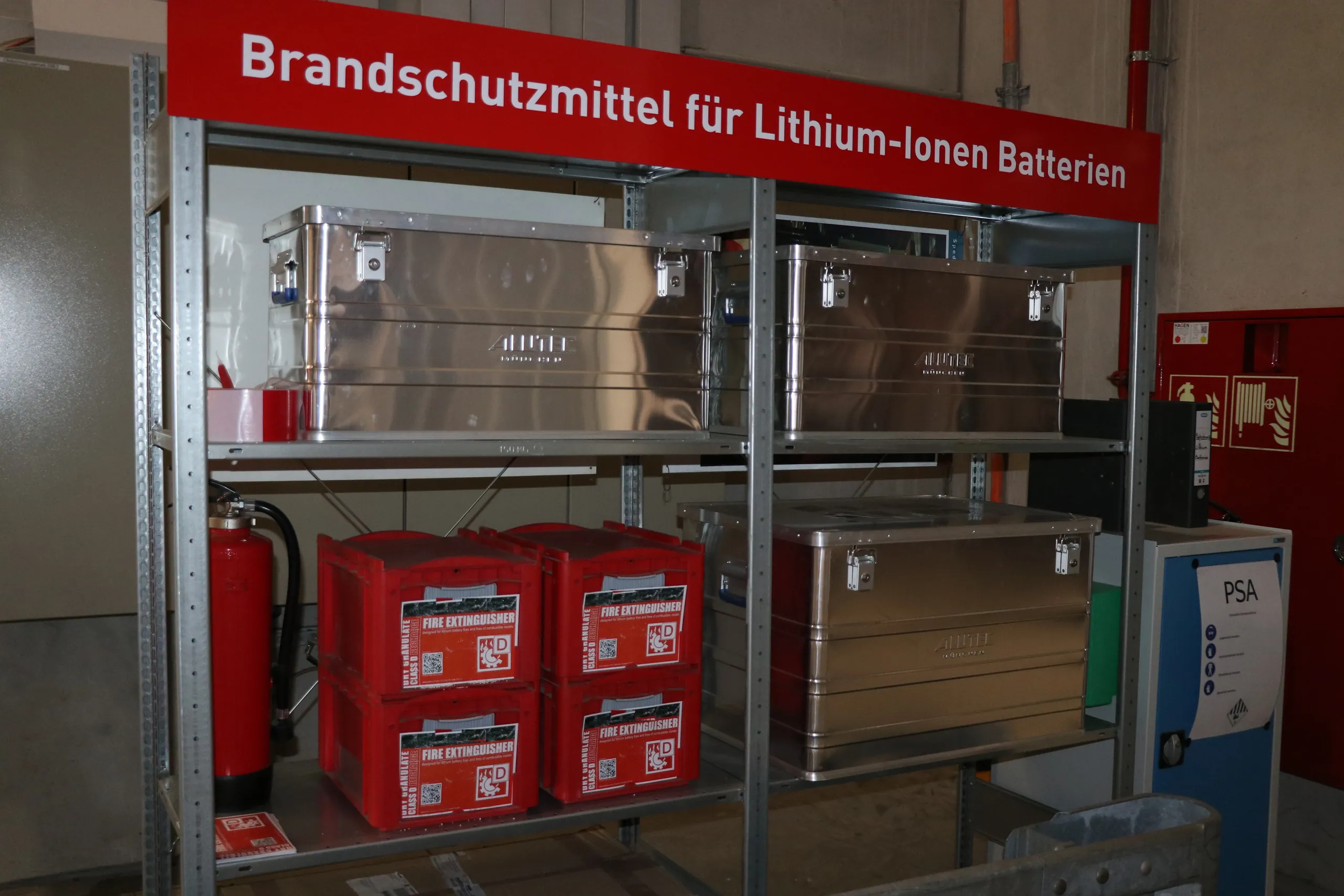
Small consumer-market batteries come back damaged more often than most: dropped e-bike batteries, crashed e-scooters, aged cells. Damaged lithium-ion batteries (DDLB) are safety-critical and must not be handled like ordinary goods, and air transport is ruled out for them entirely.
The EBH packs such batteries under the rules written for them and arranges their transport through a specialized partner, uses thermal imaging to catch thermal anomalies early, and keeps a clear emergency response plan ready for a worst-case event. With ADR-trained staff and a management system to DIN EN ISO 9001 and 14001, the whole chain stays traceable.
Batteries from e-bikes, pedelecs and e-scooters count as batteries for light means of transport, or LMT batteries, under the EU Battery Regulation (Regulation (EU) 2023/1542). Producers bear the main responsibility for taking them back (extended producer responsibility since 18 August 2025); retailers must take back waste batteries. From 18 February 2027, LMT batteries also need a digital battery passport.
The European Battery Hub supports manufacturers, importers and retailers with suitable transport containers, the collection of used and damaged batteries as dangerous goods and onward routing to recycling with a certificate of disposal, arranged through a specialized partner with a permit for waste transport. Deadlines and obligations at a glance: EU Battery Regulation and battery passport.
Talk directly with our business development team.
We will get back to you within 24 hours on business days.
Head of Business Development

Business Development Manager

Business Development Manager
E-bike and e-scooter batteries are lithium-ion batteries and therefore Class 9 dangerous goods. A spare battery shipped on its own falls under UN 3480, a battery packed with or contained in equipment under UN 3481. Since ADR 2025, an e-bike or e-scooter with a built-in battery counts as a vehicle under UN 3556. You need tested packaging with short-circuit protection, correct labeling and transport documents. Packaging and documents are the consignor's responsibility; we can take care of the labeling and handle ADR transport to more than 40 countries.
Yes. We handle the import of micromobility batteries from China and Asia, including customs clearance. Temporary storage (up to 90 days) lets you defer import duties until the goods move into distribution; for longer periods, we apply for a customs warehouse if needed (no time limit, 2 to 3 months of lead time). Our Paderborn site is connected to the ARA ports, to Hamburg and Duisburg, and via the A33, A2 and A44 motorways.
Yes. We carry Class 9 lithium-ion batteries in full ADR compliance in smaller quantities too, supplying retail, e-commerce and service partners in more than 40 countries. That makes professional dangerous goods logistics worthwhile even for single spare batteries and follow-up deliveries.
Damaged and defective lithium-ion batteries (DDLB) must be securely packed under the applicable special provisions and packing instructions and carried as Class 9 dangerous goods; air transport is ruled out for them. We provide the tested packaging and collection containers, arrange their transport directly to recycling through a specialized partner and document the journey. Damaged or defective batteries do not come to Paderborn.
Critically defective batteries, for example after a fall, water ingress or with signs of heating, are isolated and handled in an battery containment box. The battery containment box used (Liio-Box) is covered by BAM specification 15854 and withstands up to 1,240 °C on the inside while staying at a maximum of 52 °C on the outside. Thermal imaging catches thermal anomalies early, at goods receipt and in the warehouse, and a coordinated emergency response plan takes over if the worst happens.
No. The EBH brings together import, customs, storage, ADR transport and the recycling connection through partners from a single source. You draw on a certified hazardous materials warehouse (WGK 3, Class 9 M4) with 45,000 storage spaces, a dedicated ADR fleet and an emergency response plan, without investing in dangerous goods infrastructure yourself.
Talk to our team about import, customs or distribution of your e-bike and e-scooter batteries. Call us on +49 5251 7207-815 or email info@european-battery-hub.com. We respond within 24 hours on business days.