
Marcel Niebuhr
Head of Business Development

How a lithium-ion battery fire starts, how to spot it early and what to do in an emergency.
A lithium-ion battery fire starts when a cell goes into thermal runaway after overheating, a short circuit, damage or incorrect charging: the cell keeps heating itself, releases flammable and toxic gases and can ignite neighboring cells. The European Battery Hub (EBH) in Paderborn, Germany, counters this risk with inspected goods receipt, a fire alarm system, gas detection, a round-the-clock thermal imaging check by drone, FM Global fire suppression and a defined emergency response plan that is practiced regularly.
A battery fire goes back to one of these causes:
Any of these causes can lead to thermal runaway: the cell keeps heating itself, vents flammable and toxic substances and can drag neighboring cells along. Without the right technology, a lithium-ion battery fire therefore spreads quickly across entire storage units. It is hard to extinguish because the cells carry the energy for the reaction themselves: water cools and stops the spread, but it does not reliably end the reaction in the affected cell.
Escaping electrolyte adds a further hazard, as it is flammable and hazardous to water. The hazardous materials warehouse of the European Battery Hub is therefore designed for substances of the highest German water hazard class (WGK 3), and fire water is retained inside the hall: the floors are sealed, and a fire water barrier is added. Damaged and defective lithium batteries (DDLB) are particularly critical and must be packed and shipped separately: see shipping damaged lithium batteries. In transport, lithium-ion batteries are Class 9 dangerous goods (UN3480 and UN3481). What companies need to consider in their own facility is covered in the checklist how to store lithium batteries safely.
Move the mouse over a card: the EBH response is on the back.Tap a card: the EBH response is on the back.
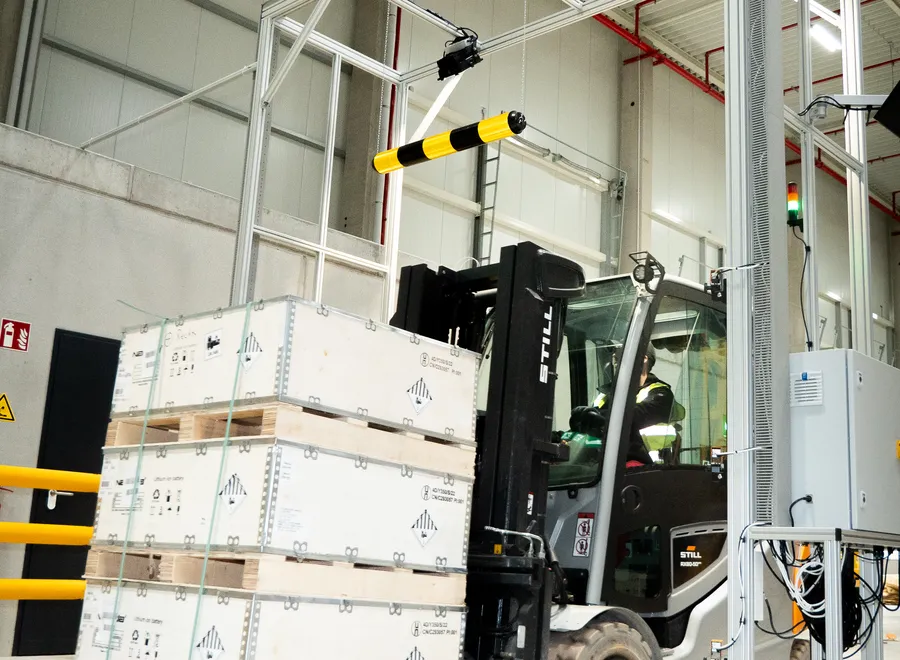
Batteries pass through the inbound inspection gate (WE-Gate) with a temperature check before they reach the warehouse; oversized goods go through their own goods receipt processes.
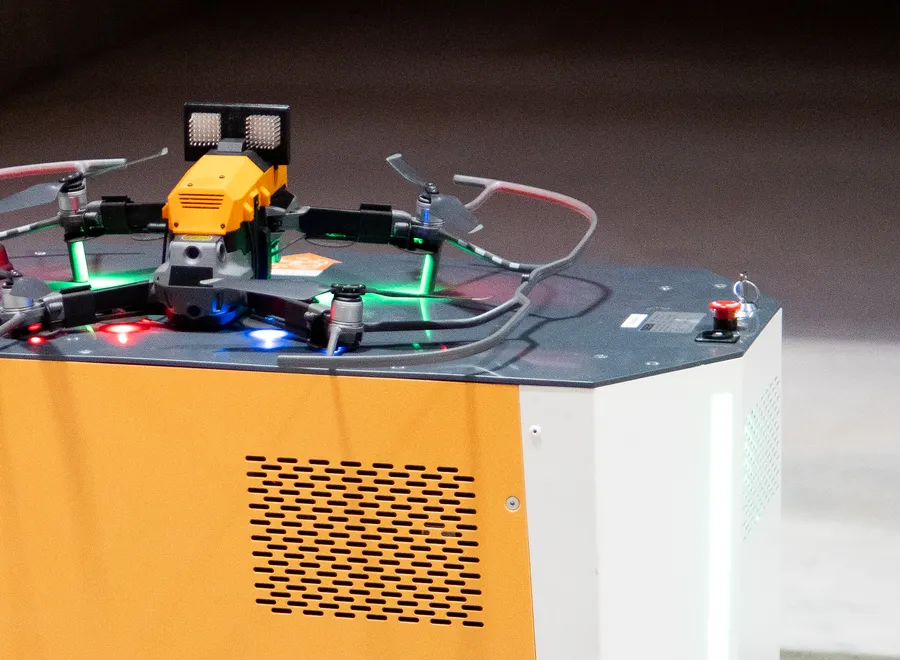
A thermal imaging drone checks the warehouse around the clock with thermal imaging, and a fire alarm system and gas detection monitor the warehouse as well.
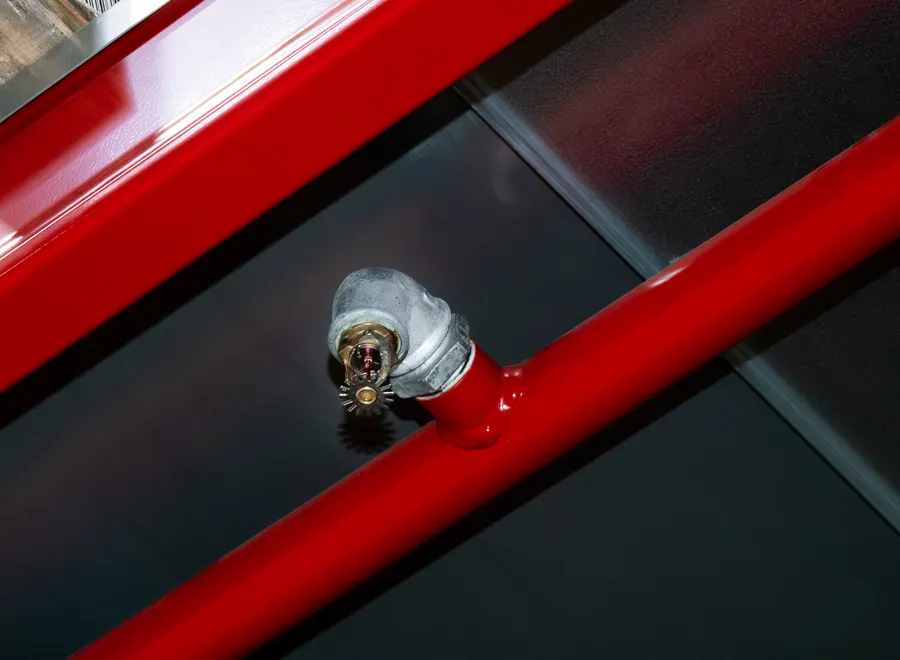
The hazardous materials warehouse is designed with FM Global sprinklers and a fire water tank of around 1 million liters.
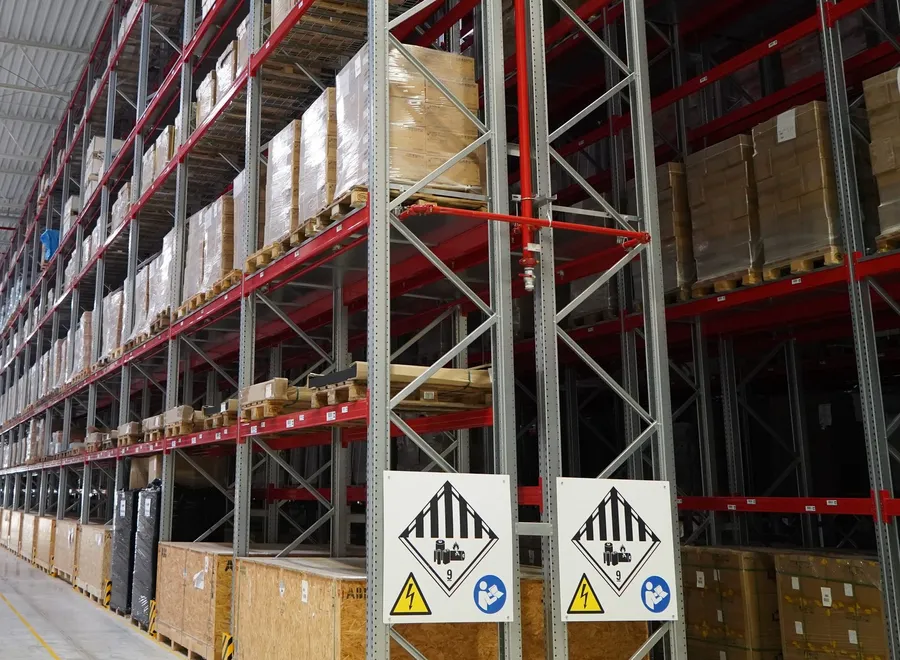
Sealed hall floors and a fire water barrier in the hazardous materials warehouse, which is designed for substances of the highest water hazard class (WGK 3).
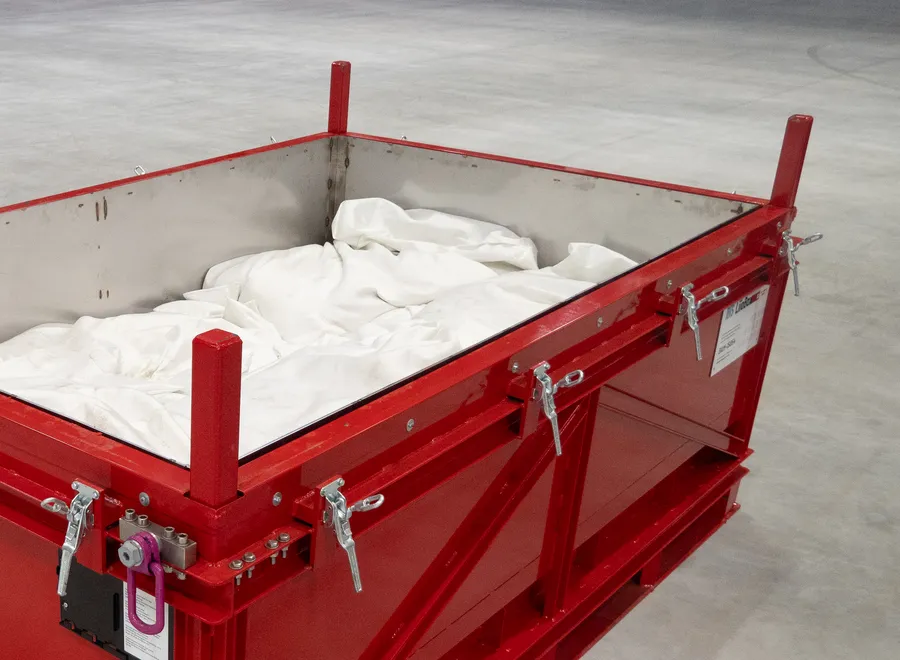
A defined emergency response plan with the containment box secures critical units. The box is covered by BAM specification 15854 and withstands up to 1,240 °C inside while staying no more than 52 °C outside.
A lithium-ion battery fire often gives warning. If you notice one of these signs, keep people away, stop charging and treat the battery as damaged.
A bulging or split battery shows gas building up inside the cell. It must not be charged or used any further.
If a battery gets warm without load or charging, a reaction is under way in the cell. In a warehouse, thermal imaging shows this before anyone could feel it.
A chemical smell, hissing or smoke shows that the cell is already venting. Keep your distance immediately and call the fire department.
Damp patches or discoloration on the casing point to leaked electrolyte, which is flammable and hazardous to water.
A battery fire in the warehouse is a job for the fire department. For companies, the sequence is simple:
Why battery fires flare up again: in a damaged cell the reaction can continue after the fire has been put out. A battery that seems extinguished can therefore reignite hours later. How the European Battery Hub organizes this process in its own warehouse is described in the emergency response plan.
Talk directly with our business development team.
We will get back to you within 24 hours on business days.
Head of Business Development

Business Development Manager

Business Development Manager
A lithium-ion battery fire usually starts with thermal runaway in a single cell. Triggers include overheating, short circuits, mechanical damage, overcharging and deep discharge. The cell then keeps heating itself, vents flammable and toxic substances and can ignite neighboring cells. This is why a battery fire spreads quickly and is hard to extinguish.
Read more: Thermal runaway: causes, phases and extinguishing
Yes. In a damaged cell, the chemical reaction can continue after the fire has been put out, so a battery that seems extinguished can reignite hours later. Affected batteries are therefore kept cooled, stored separately in a suitable container such as the containment box and monitored.
Read more: Battery containment box (Liio-Box)
In a battery fire, and already when an overheated cell vents, flammable and toxic gases are released, including hydrogen, carbon monoxide, hydrocarbons and hydrogen fluoride (HF). Hydrogen fluoride forms from the fluorine-containing conducting salt of the electrolyte and is highly corrosive and toxic. The rule is therefore: keep your distance, do not inhale the smoke and tell the fire department that lithium batteries are involved.
The European Battery Hub relies on several stages. At the inbound inspection gate, batteries are checked for temperature and condition, a thermal imaging drone checks the warehouse around the clock with thermal imaging, a fire alarm system and gas detection monitor it, and the hazardous materials warehouse has FM Global sprinklers and a firefighting water tank of around 1 million liters. Critical batteries go into the containment box.
Read more: How to store lithium batteries safely
A defined emergency response plan takes effect. The FM Global sprinkler system fights the fire and its spread. Affected or critical units are transferred into the containment box, which is covered by BAM specification 15854, withstands up to 1,240 °C inside and reaches no more than 52 °C outside.
Read more: Emergency response plan
At the European Battery Hub, damaged and defective lithium batteries (DDLB) are secured separately and packed and shipped under ADR special provision 376: damaged batteries under packing instruction P908, critically defective ones under P911. Critical units go into the containment box. We arrange the transport through a specialized partner.
Read more: Shipping damaged lithium batteries
Tell us the quantity, battery type and condition of your batteries. We will show you how the European Battery Hub handles storage, transport and emergencies, and get back to you within 24 hours on business days.