Delivery & label scan
Automatic scanners capture all relevant information from the batteries' labels and markers and transfer it straight into the warehouse management system (WMS). This keeps inventory records reliable and saves manual data entry.
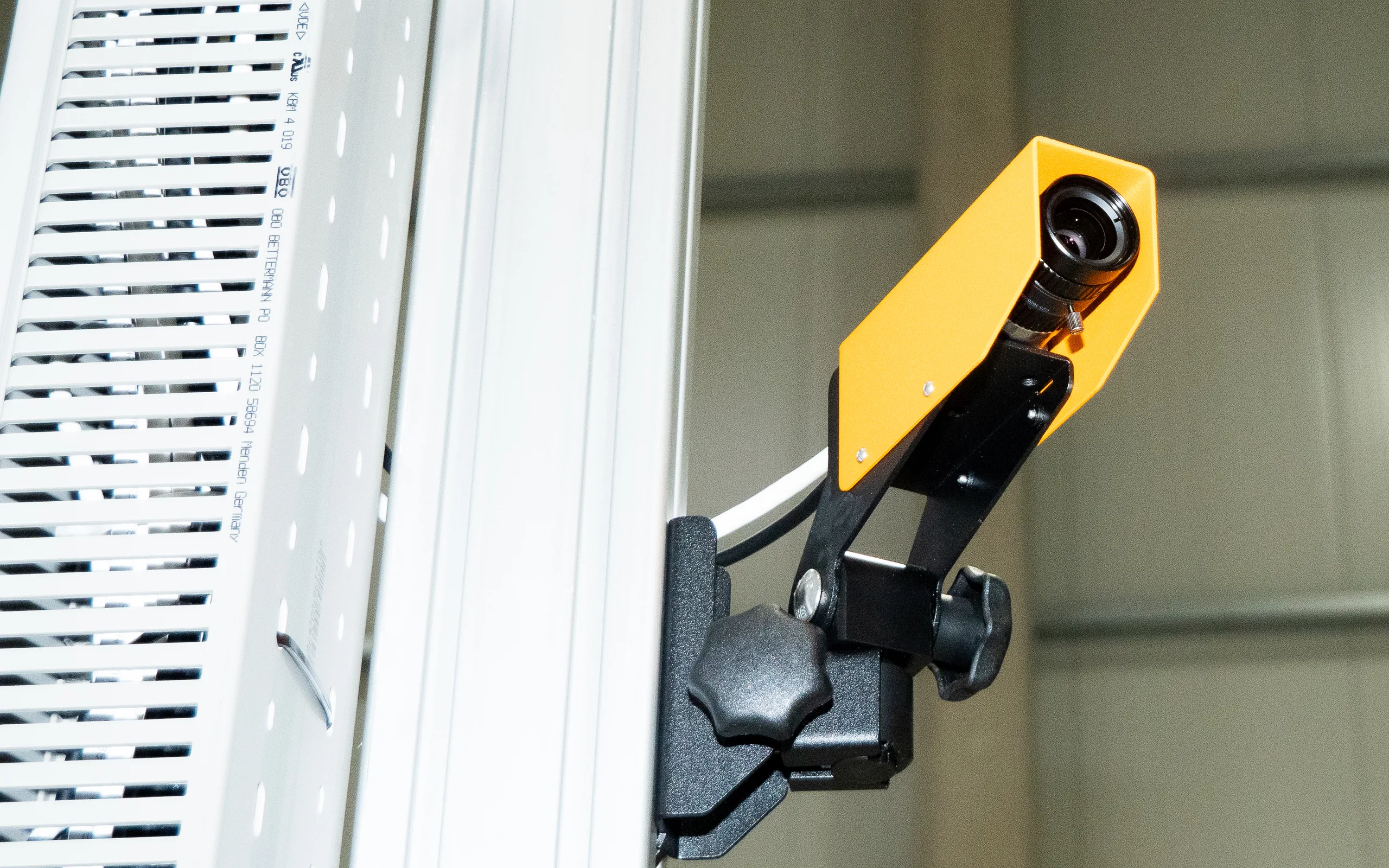
Incoming battery inspection: at the gate we check every delivery for temperature and damage and document it with photos.
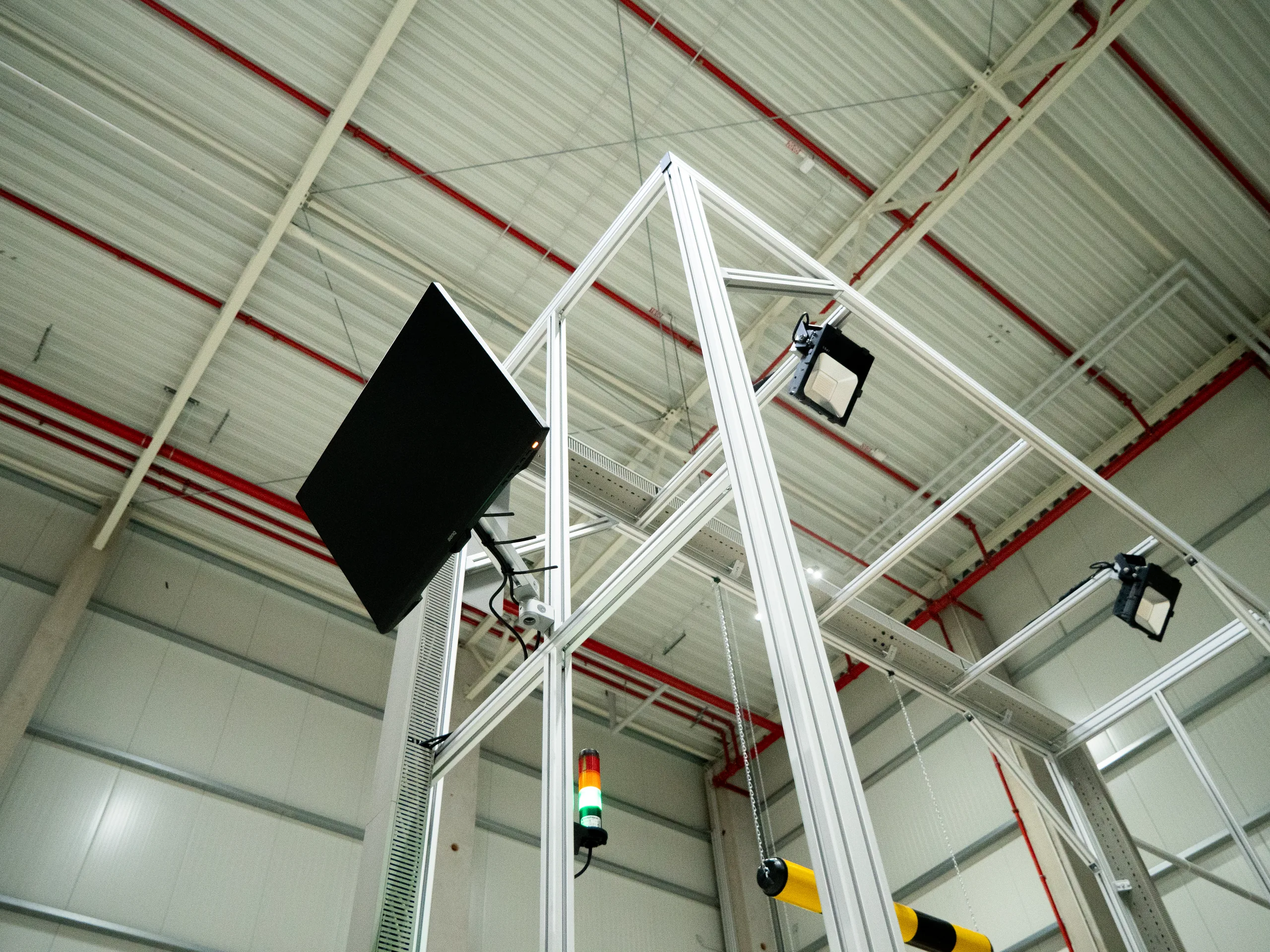
Incoming battery inspection at the European Battery Hub (EBH) in Paderborn, Germany, runs through the inbound inspection gate (WE-Gate), as long as the goods fit through the gate: as each pallet passes through, thermal sensors and cameras check it for abnormal temperatures and damage and record item number, temperature, volume and condition directly in the warehouse management system. Goods too large for the gate go through their own customer- or product-specific goods receipt processes. Only undamaged, verified batteries are stored. Hartmann International has made the temperature check at goods receipt standard since 2019.
As each pallet passes through, thermographic sensors and cameras check it for abnormal temperatures and damage. Only undamaged, inspected batteries are put into storage.
Recorded directly in the warehouse management system
As it passes through the inbound inspection gate, every pallet is checked thermally and visually, automatically and with no manual handling. Abnormal temperatures and visible damage are detected before the goods enter the warehouse.
The drawing shows the setup: thermographic sensors, camera technology for photographic documentation, and automatic label and marker scanners with a direct link to the warehouse management system (WMS).
Measures the temperature of the pallet as it passes through. Abnormal heat is detected before the goods enter the warehouse.
Photograph the pallet. Visible damage and the condition on delivery are documented with photos.
Read the labels and markers on the batteries automatically, with no manual typing.
Item number, temperature, volume and condition appear immediately in the warehouse management system.

Playing the video loads it from YouTube (Google). Privacy
Watch on YouTubeEnglish subtitles
Inspection and documentation in a single pass.
Thermal sensors detect abnormal temperatures, cameras detect visible damage. Only undamaged batteries reach the warehouse.
Camera technology and sensors automatically record item number, temperature, volume and condition, and the data goes straight into the warehouse management system.
The gate photographs the condition on arrival, so every visible defect is recorded right at goods receipt.
Seamless documentation of every goods receipt gives precise traceability for each delivery.

Damaged or defective batteries are a considerable risk in a warehouse: they can heat up and start a fire. That is why the European Battery Hub checks batteries right at goods receipt. Anything that stands out there does not enter the warehouse, so risks of lithium batteries never build up on the racks. How the EBH then protects lithium batteries in storage is explained in how to store lithium batteries safely.
Photographic documentation of the external condition on arrival complements the check: visible damage is on record from goods receipt onwards, which makes claims and transport damage easier to resolve.
From delivery to put-away in four steps.
Automatic scanners capture all relevant information from the batteries' labels and markers and transfer it straight into the warehouse management system (WMS). This keeps inventory records reliable and saves manual data entry.

Integrated thermographic sensors check every delivery that passes through the gate for abnormal temperatures. Damaged or overheated batteries are identified early, and in a critical case our emergency response plan takes over at once.
The gate records the external condition on arrival in photographs. Visible damage is documented from goods receipt onward, which makes it easier to settle transport damage claims.
Only undamaged, verified batteries are released for storage in our hazardous materials warehouse. This makes the WE-Gate the first safety stage of our battery logistics.

As each pallet passes through, automatic scanners read all relevant information from the batteries' labels and markers and transfer it immediately into the warehouse management system (WMS). The batteries are thus clearly identified and traceable from goods receipt onward.
During ongoing warehouse operations, the thermal imaging drone takes over: it scans the stock around the clock for the inventory and measures the temperature of every stored battery.
Certified storage of lithium-ion batteries in a hazardous materials warehouse with 20,300 m² and 45,000 storage spaces.
To battery logisticsCondition monitoring, trickle charging, and preventive maintenance of stored batteries.
To maintenance chargingThe round-the-clock thermal imaging check detects thermal anomalies during ongoing warehouse operations.
To the thermal imaging droneTalk directly with our business development team.
We will get back to you within 24 hours on business days.

Head of Business Development

Business Development Manager

Business Development Manager
The inbound inspection gate (WE-Gate) at the European Battery Hub is an automated inspection gate that checks battery deliveries before they enter the hazardous materials warehouse. As each pallet passes through, thermal sensors check for abnormal temperatures, cameras check for damage, and scanners transfer label and marker data straight into the warehouse management system. Inspection and documentation happen in one pass. Goods too large for the gate go through their own customer- or product-specific goods receipt processes.
The WE-Gate detects damaged or overheated batteries through two combined inspection systems: the integrated thermographic sensors measure the surface temperature of every pallet passing through the gate and reveal thermally abnormal batteries, while the camera technology makes external damage such as deformation, cracks, or leaking electrolyte visible. Abnormal temperatures and damage are detected before the goods enter the warehouse. Only undamaged, verified batteries are then released for storage.
If the WE-Gate detects an overheated or damaged battery, the shipment is held back and not released for storage. In a critical case, the emergency response plan takes over: the affected battery is isolated and can be transferred into the containment box with BAM specification 15854 (Liio-Box, resistant to 1,240 °C inside and max. 52 °C outside).
Read more: Battery containment box, Thermal runaway
The WE-Gate photographs the external condition of every shipment and transfers all label and marker data directly into the warehouse management system (WMS). Every delivery is therefore traceable, and in the event of transport damage it is easier to establish where the damage occurred. For you, that means less effort with claims and a reliable data basis for inventory management.
Yes, imports that reach Paderborn via the ARA ports, Hamburg or Duisburg also pass through the WE-Gate, provided their dimensions fit through it. Goods too large for the gate go through their own customer- or product-specific goods receipt processes. The gate checks the temperature, records item number, volume and condition and documents each shipment with photos. For the transport itself, the shipment must be marked as Class 9 dangerous goods, and the battery type usually needs a passed UN 38.3 test. On request, we combine the inbound check with our customs service.
Read more: UN 38.3 and test summary, UN 3480 and UN 3481, Customs service
Your batteries are checked for temperature and damage on arrival and documented with photos before they go into storage. Talk to our team about storage space: call +49 5251 7207-815 or email info@european-battery-hub.com. We respond within 24 hours on business days.