01
Registering the used batteries
Manufacturers, workshops, dealers and collection points register their waste batteries. The EBH plans the pickups and provides the containers.

Transport of used batteries to your recycling plant, ADR-compliant and carried out by a specialized partner with a permit.
Anyone who needs used lithium battery transport needs dangerous goods law and waste law handled together. The European Battery Hub (EBH) in Paderborn, Germany, organizes the B2B collection of end-of-life and defective lithium-ion batteries, packing by condition and ADR Class 9 transport (UN 3480/UN 3481) to the recycling plant, carried out by a specialized partner with a permit for waste transport. Critical cells are carried in the battery containment box with BAM specification 15854.
For recyclers, used batteries are raw material: mechanical processing turns them into black mass, from which lithium, nickel and cobalt are recovered. For that, the material has to arrive at the plant reliably, sorted, documented and fully compliant with dangerous goods law. More on the process itself under battery recycling and second life.
We organize the B2B collection of end-of-life and defective batteries at manufacturers, workshops, retailers and collection points and their ADR-compliant transport to your recycling plant through a specialized partner. Our partner moves critically defective batteries in special transport boxes. Its drivers are specifically trained to handle used and damaged batteries, and the truck carries the right emergency equipment.
Because defective batteries are often classed as waste, the partner holds the permit for waste transport and has a connected recycling and disposal network. Damaged and defective batteries (DDLB) are handled under the applicable packing rules, and every batch is documented, with the records that you and the authorities expect.
Behind this are more than 170 years of logistics experience at Hartmann International and the recycling and disposal network of our specialized partner.
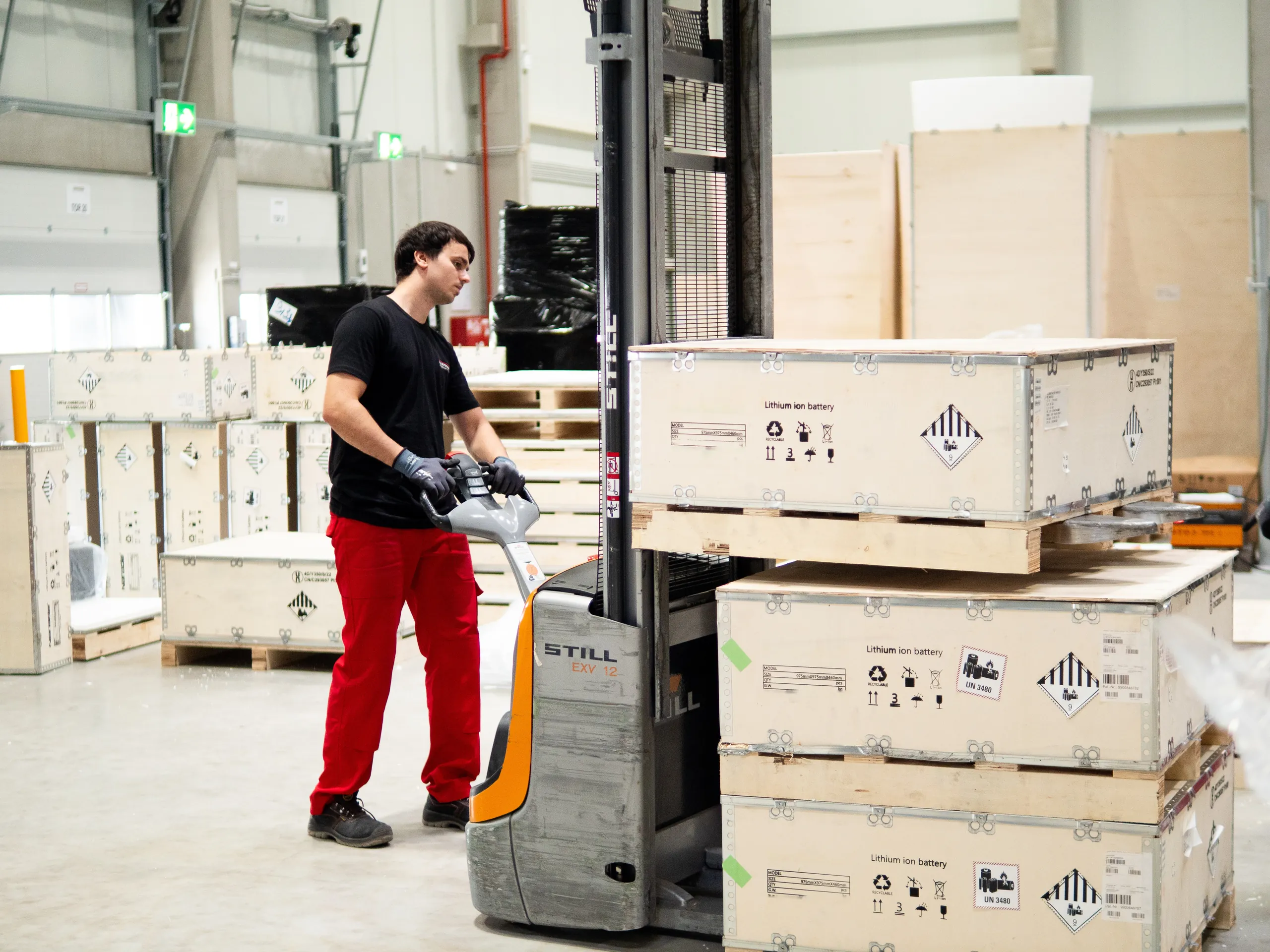
It is not only recyclers: manufacturers, retailers and service businesses also have to get used or damaged lithium-ion batteries safely to a recycler. The European Battery Hub organizes this for senders from a single source: suitable transport containers, a check of acceptability by condition and applicable rules, collection and transport to the recycler through our specialized partner, and recycling with a certificate of disposal.
A case from practice: the battery return of a manufacturer of electrical and automation technology. How defective batteries are packed is explained on the page transporting defective batteries.
From collection to documented delivery, aligned with your recycling process.
Pickup of waste batteries from manufacturers, workshops, dealers and collection points, on a plannable schedule by arrangement, through our specialized partner.
Request a collection02Pickup at the sender and transport directly to your plant, with no interim storage and no handling in Paderborn.
Reverse logistics03ADR-compliant transport of waste batteries in Class 9 (UN 3480/UN 3481) through our specialized partner, with trained drivers and complete documentation.
To dangerous goods transport04Safe packing of damaged and defective batteries under the applicable packing regulations; we arrange their transport through a specialized partner.
To defective batteries (DDLB)05Seamless documentation and disposal records, auditable for you and the authorities.
Send a requestWe supply suitable transport containers and check before collection whether a battery can be accepted and carried given its condition and the applicable rules.
From scattered returns to documented delivery, one end-to-end process.
Manufacturers, workshops, dealers and collection points register their waste batteries. The EBH plans the pickups and provides the containers.
Before collection we check whether the batteries can be accepted and carried given their condition and the applicable rules.
Undamaged used batteries are packed to packing instruction P909, damaged and defective batteries (DDLB) to P908, and critically defective ones go into the battery containment box.
Our specialized partner collects the used batteries from the sender and takes them directly to your plant, with no interim storage.
ADR-compliant transport to your recycling plant by our partner, with complete documentation and disposal records.
Undamaged used batteries travel under packing instruction P909, damaged or defective ones under P908 and critically defective ones under P911, in the battery containment box with BAM specification 15854.
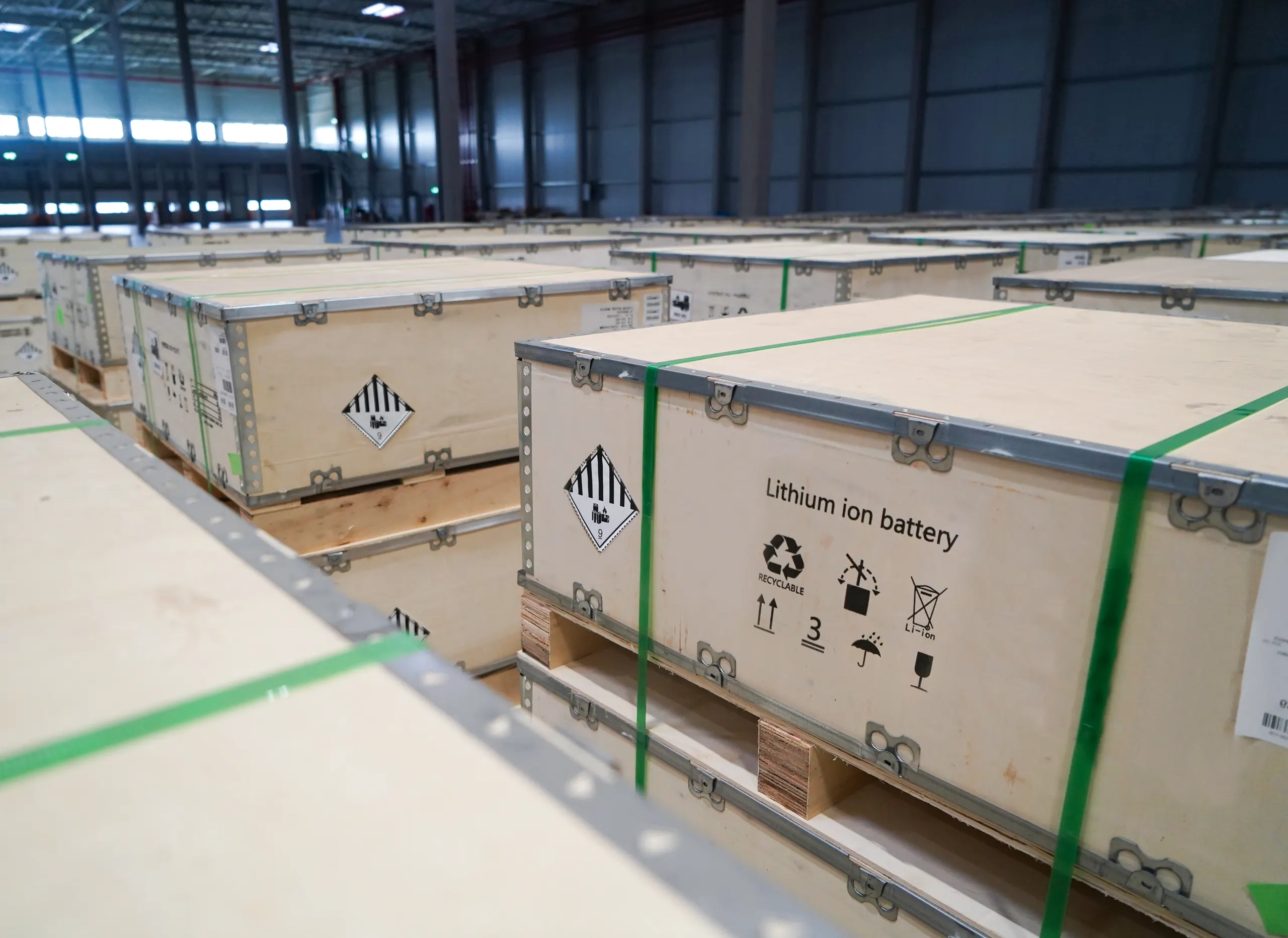
In battery recycling, complete documentation is essential. The waste-law side is covered by our specialized partner, which holds the permit for waste transport. You receive the required records of the origin, quantity and transport of the used batteries, so every delivery is documented and you can account for every load to the authorities at any time.
Transport runs in line with ADR as Class 9 dangerous goods, and damaged and defective batteries (DDLB) are handled under the prescribed packing rules. A management system certified to DIN EN ISO 9001 and 14001 and thermal imaging monitoring in the hazardous materials warehouse complete the safety chain. Recyclers receive a raw material stream with records for every batch.
Overview for road transport under ADR. Whether we can accept and carry a battery is checked in each case.
| Waste battery | Rule | Packaging and marking |
|---|---|---|
| Undamaged, for disposal or recycling | Special provision 377 | Packing instruction P909, marking 'LITHIUM BATTERIES FOR DISPOSAL' or 'LITHIUM BATTERIES FOR RECYCLING' |
| Damaged or defective (DDLB) | Special provision 376 | Packing instruction P908 |
| Critically defective | Special provision 376 | Packing instruction P911, at the EBH in the battery containment box with BAM specification 15854 |
| Small lithium batteries from collection points | Special provision 636 | Relief up to the intermediate processing facility, only under the conditions stated there |
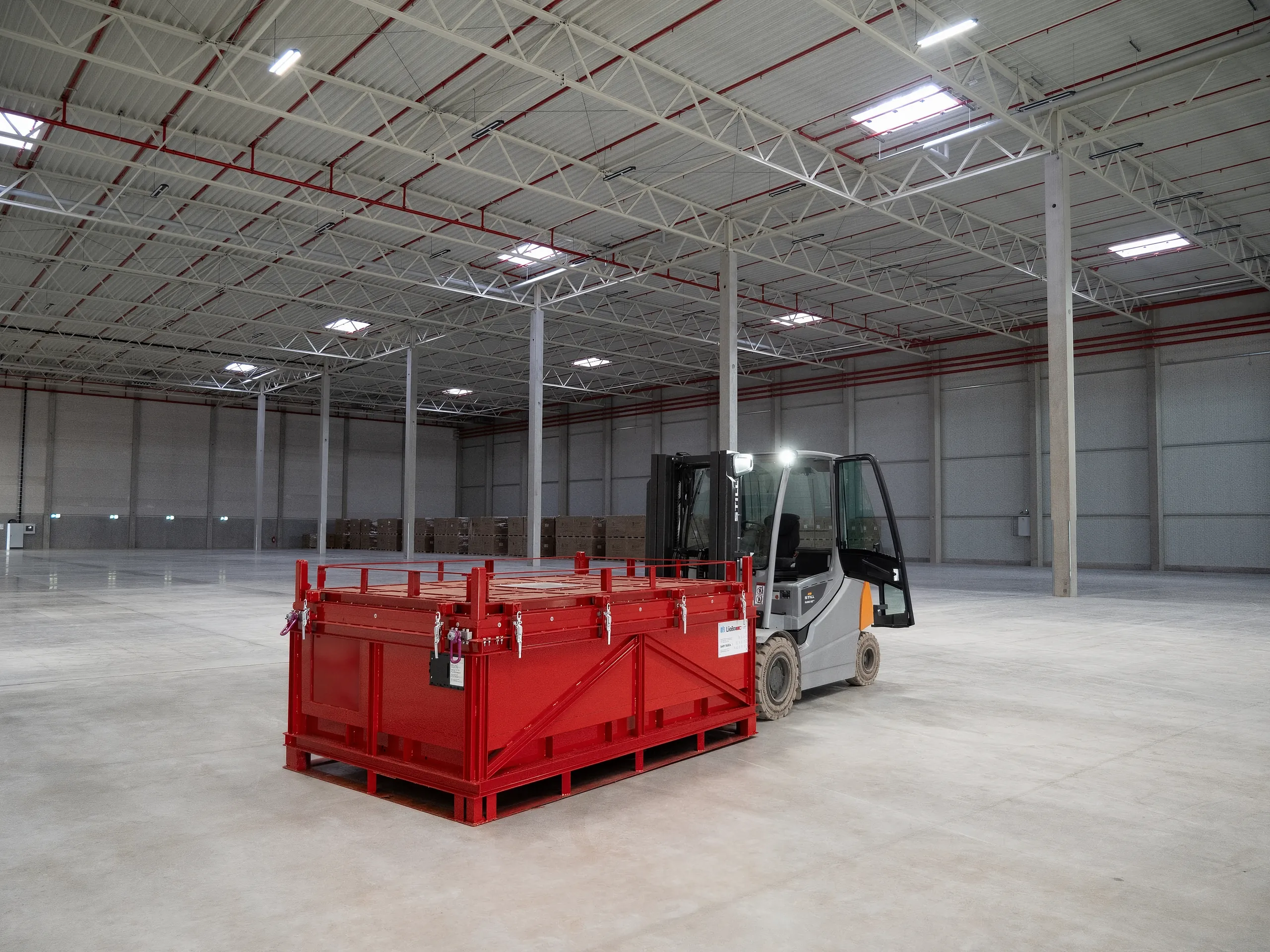
How a manufacturer of electrical and automation technology gets used batteries safely to the recycler
For a manufacturer of electrical and automation technology, the European Battery Hub organizes the transport of used and damaged batteries to the recycler: from suitable transport containers through pickup by our partner to the certificate of disposal.
A manufacturer of electrical and automation technology has to take back used, rejected or damaged batteries from different regions and send them for recycling. Depending on their condition, different requirements apply to packaging, transport and recovery.
Clearly defined processes, one point of contact for transport to the recycler and fewer interfaces between senders, carriers and recycling companies.
We check in every individual case whether a battery can be transported. Used, damaged and waste batteries go directly to the recycler and are not stored in Paderborn.
Looking for a partner to transport waste batteries to the recycler?Discuss your use case with our team.
Request a quoteTalk directly with our business development team.
We will get back to you within 24 hours on business days.

Head of Business Development

Business Development Manager

Business Development Manager
The European Battery Hub (EBH) arranges the B2B collection of end-of-life and defective lithium-ion batteries from manufacturers, workshops, retailers and collection points and their ADR-compliant transport as Class 9 dangerous goods (UN 3480/UN 3481) to the recycling plant through a specialized partner with a permit for waste transport. Every delivery comes with complete documentation, which gives the plant a predictable raw material stream.
Undamaged lithium-ion batteries carried for disposal or recycling fall under ADR Special Provision 377 and are transported under packing instruction P909 with the marking 'LITHIUM BATTERIES FOR DISPOSAL' or 'LITHIUM BATTERIES FOR RECYCLING'. Damaged or defective batteries (DDLB) fall under the stricter Special Provision 376 with packing instruction P908. In both cases this is Class 9 dangerous goods (UN 3480 for batteries on their own, UN 3481 for batteries in or with equipment), and we arrange their transport through a specialized partner with trained drivers and complete documentation.
Damaged and defective lithium-ion batteries (DDLB) travel under special provision 376 and packing instruction P908 as Class 9 dangerous goods; the European Battery Hub (EBH) arranges their transport through a specialized partner. For thermally abnormal or critically defective batteries we use the battery containment box (Liio-Box), which is covered by BAM specification 15854 and withstands up to 1,240 °C on the inside while reaching no more than 52 °C on the outside.
As a rule, yes, if the waste batteries count as hazardous waste: their commercial collection and transport then requires a permit under Section 54 of the German Circular Economy Act (KrWG). From November 9, 2026, the European List of Waste classifies waste lithium batteries as hazardous waste (waste code 16 06 07*); before that, they counted as non-hazardous (16 06 05). For the European Battery Hub (EBH), the waste-law side is covered by our specialized partner, which holds the permit for waste transport.
Together with our specialized partner, the European Battery Hub (EBH) provides complete documentation of the origin, quantity and transport of the used batteries, together with the required disposal and recovery records, auditable for both your recycling operation and the authorities. The EBH management system is certified to DIN EN ISO 9001 and DIN EN ISO 14001. Every delivery is therefore documented, and your operation can account for it to the supervisory authorities.
No. The European Battery Hub does not store batteries that are declared as waste, nor damaged or defective batteries. Whether and when a damaged battery will catch fire cannot be predicted, and a fire would also put other customers' goods at risk. We arrange collection and transport to your plant through our specialized partner.
Black mass is the black, powdery mixture produced when lithium-ion batteries are mechanically processed. It contains valuable components such as lithium, nickel, cobalt, manganese and graphite, which are recovered in recycling. Before a plant can recover it, the waste batteries first have to reach it safely and with full documentation.
Read more: Battery recycling and second life
Talk to our team about B2B collection and documented transport of waste batteries to your recycling plant. Call +49 5251 7207-815 or email info@european-battery-hub.com. We respond within 24 hours on business days.