
Marcel Niebuhr
Head of Business Development

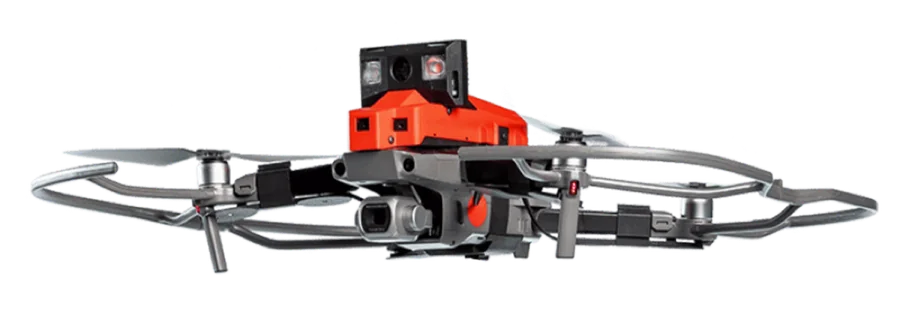
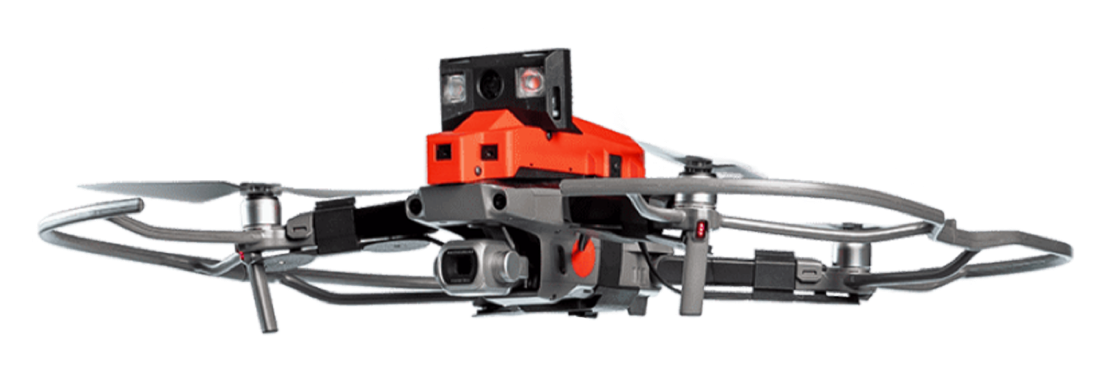
The thermal imaging drone patrols the high-bay warehouse and the block storage area around the clock and measures the temperature of every battery.
A thermal imaging drone is a drone with a thermal camera. At the European Battery Hub (EBH) in Paderborn, Germany, it patrols the high-bay warehouse around the clock and measures the temperature of every stored lithium-ion battery. This makes a hot spot visible, the early sign of thermal runaway. At the same time, it scans barcodes and labels for the inventory and the digital twin.

A thermal sensor measures the temperature differences on every battery. Overheating and other risks of lithium batteries thus become visible before any damage occurs. In the EBH battery logistics, the drone complements the temperature check at goods receipt, the fire alarm system and the gas detection. It is part of the three-stage fire protection concept with which the EBH stores lithium batteries safely.
Most thermal imaging drones fly outdoors: over solar installations, roofs and facades, looking for heat loss or faulty modules. The European Battery Hub's thermal imaging drone works inside the building instead. It flies along the aisles of the high-bay warehouse and measures the temperature of the stored lithium-ion batteries on every rack level. Its purpose is early detection on batteries, before thermal runaway can develop, not building thermography.
The drone patrols the high-bay warehouse and the block storage area, measures the temperature of every battery and makes any anomaly visible.
The drone scans barcodes and labels on the goods and documents current stock, including a photo, in the customer portal.
The drone scans the stock around the clock. A fire alarm system and gas detection also monitor the warehouse.
The drone builds a digital twin of the warehouse. The location of every item is known, and a comparison view shows the target/actual check.

Playing the video loads it from YouTube (Google). Privacy
Watch on YouTubeEnglish subtitles
In the high-bay warehouse the drone reaches every rack level. It combines two tasks in one flight: it measures the temperature of the stored batteries and scans the stock for the inventory. You can see current stock, including a photo, in the customer portal.
The batteries are already checked at goods receipt, at the inbound inspection gate or, if the goods are too large for the gate, in a separate goods receipt process. If the drone detects an anomaly during operation, our emergency response plan takes over immediately. How stored batteries are kept at the right state of charge is shown on the page about maintenance charging.
The round-the-clock thermal scan makes a battery that is heating up visible at an early stage. This protects your goods and all other stock in the same warehouse.
The inventory scan documents your stock with photos. You can view it in the customer portal.
The digital twin compares the scanned stock with the target stock. Discrepancies show up immediately.

The drone captures every pallet: it measures the temperature and scans barcodes and labels. In the digital twin, the European Battery Hub compares the recorded stock with the target stock (target/actual comparison). You can see your stock, including photo documentation, in the customer portal.
Talk directly with our business development team.
We will get back to you within 24 hours on business days.
Head of Business Development

Business Development Manager

Business Development Manager
At the European Battery Hub, the thermal imaging drone patrols the high-bay warehouse and the block storage area around the clock and uses a thermal sensor to measure the temperature of the stored lithium-ion batteries. If it detects an anomaly such as early overheating, the emergency response plan takes over. At the same time, it scans the stock for the inventory.
Thermal runaway announces itself through localized heating before any flames become visible. During the round-the-clock scan, the thermal camera on the drone makes these hot spots on individual batteries or pallets visible. This early detection is a central part of the emergency response plan at the European Battery Hub.
Read more: Thermal runaway: causes, phases and extinguishing
The drone flies through the warehouse around the clock and captures every load carrier at least once a day on average. In addition, a fire alarm system and gas detection monitor the warehouse.
Yes. Alongside temperature monitoring, the thermal imaging drone scans barcodes and labels on the goods and documents current stock, including a photo, in the customer portal. This data builds a digital twin of the warehouse that allows a target/actual comparison of your stock.
The drone flies through the entire high-bay warehouse, reaches every rack level and checks the stored batteries across their whole surface rather than only at fixed measuring points. At the same time it scans the stock for the inventory.
No. The thermal imaging drone of the European Battery Hub monitors the batteries stored at the EBH and is not an external inspection service. For thermal inspections of solar plants, roofs or facades, specialized drone thermography providers are the right contact. If you need to store batteries safely, the EBH is the right place.
At the European Battery Hub, your batteries are stored with a round-the-clock thermal imaging check by drone, a fire alarm system and gas detection. Tell us the quantity and battery type: call +49 5251 7207-815 or email info@european-battery-hub.com. We respond within 24 hours on business days.