
Marcel Niebuhr
Head of Business Development

Charge maintenance for lithium-ion batteries in storage: we top them up in a controlled way for each battery type and prevent deep discharge.
Lithium battery maintenance in storage means keeping stored lithium-ion batteries within a defined charge window. Once a battery reaches the lower limit, it is topped up in a controlled way, and overcharging is prevented. The European Battery Hub (EBH) in Paderborn, Germany, sets the charge window for each battery type and charges separately from the hazardous materials warehouse (storage under TRGS 510) on a monitored charging infrastructure.
Maintenance charging for lithium-ion batteries is not continuous trickle charging as with a car battery charger, but controlled topping up into a defined charge window as soon as the battery reaches a lower limit.
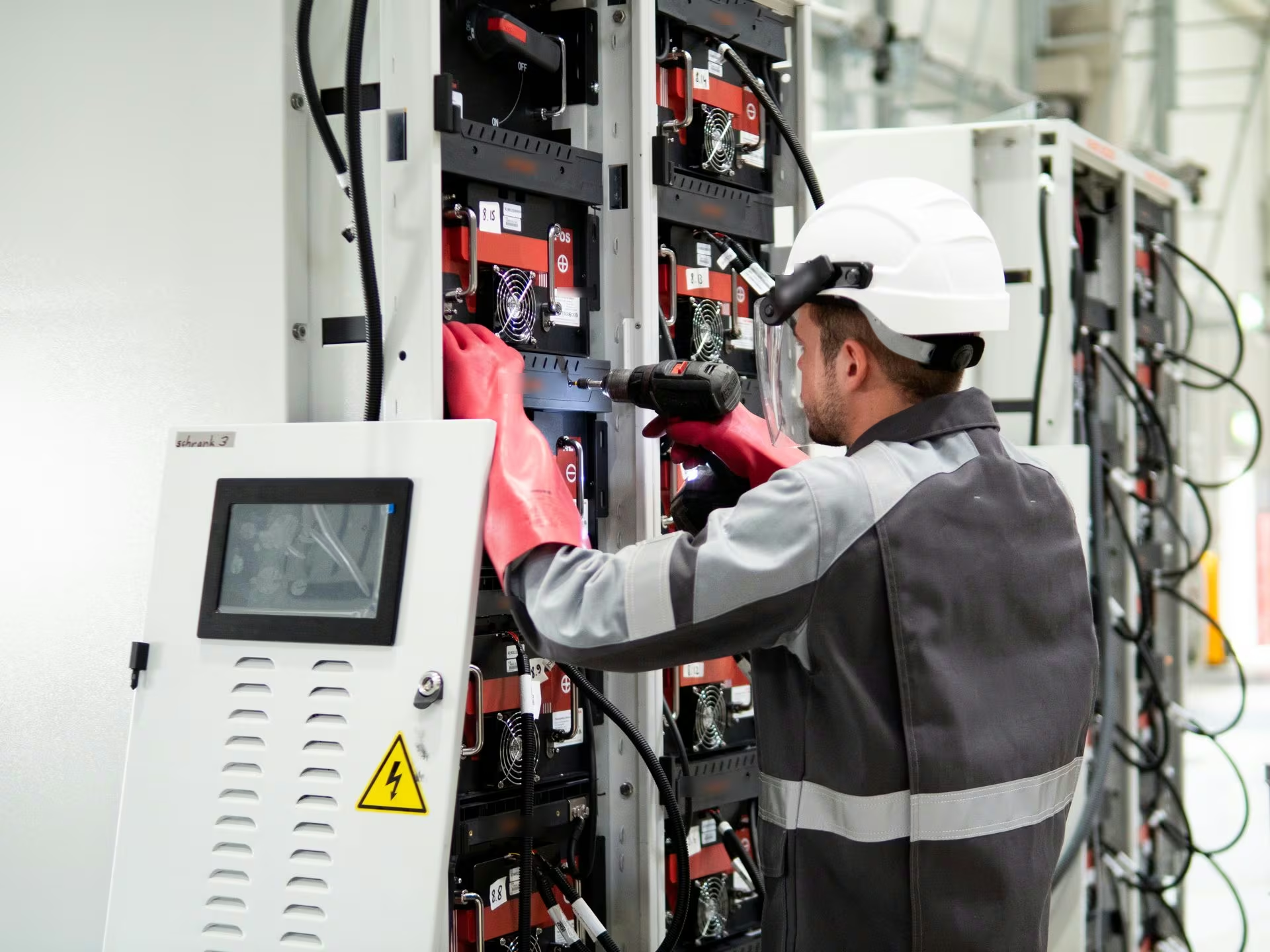
We keep the state of charge of stored lithium-ion batteries in the optimal range through regular maintenance charging: once a battery reaches the lower limit, we top it up in a controlled way. This prevents deep discharge and overcharging.
In the hazardous materials warehouseAt the monitored charging station: controlled top-up
A lithium-ion battery ages even in storage. Left to itself for months, it slowly discharges, and a discharge that runs too deep can damage the cells permanently. A permanently high state of charge is just as harmful. Without care, a stored battery loses capacity and value, and its safety risk increases.
We therefore keep the state of charge within a window that we set for each battery type: as soon as a defined lower limit is reached, we top up, and overcharging is prevented. Maintenance charging thus offsets self-discharge and prevents harmful deep discharge. Your batteries leave the warehouse in the same good condition in which they arrived.
Battery maintenance covers technical stabilization, needs-based recharging, condition assessment and clean records, all from a single source.
We monitor the charge status at the charging station and the condition of the battery systems to keep them in a safe and stable operating condition.
Battery systems are charged in a controlled, condition-dependent way to preserve performance, safety and service life.
We bring battery systems into a defined state that is ready for logistics and further processing, whether for storage or reuse.
Technical condition is analyzed through measurements and assessed in a structured way for clear go/no-go decisions.
Every maintenance step is documented for each battery and is available for audits and insurers.
Battery systems that are no longer usable or are safety-critical are taken out of the usage loop in a controlled way and transported directly to certified recycling through a specialized partner.
Our qualified electricians look after lithium-ion systems and classic energy storage in the hazardous materials warehouse: they charge according to a charging program for each battery type, run capacity tests and document every step. Our own charging station has been in operation since 2010, and battery refurbishment, with capacity testing and cell replacement, since 2014.
For shipping, our staff are trained in ADR, and in an emergency they act according to our emergency response plan.

In addition to our trained staff, we check the stored battery systems with a thermal imaging drone that takes thermal images of the stock. The drone flies through the warehouse around the clock and captures every load carrier at least once a day on average. A fire alarm system and gas detection also monitor the warehouse.
The charge status is monitored continuously at the charging station, the digital twin reconciles the stock in the warehouse, and in the customer portal you see your stock with photo documentation. How early detection and fire suppression work together is explained in How to store lithium batteries safely.
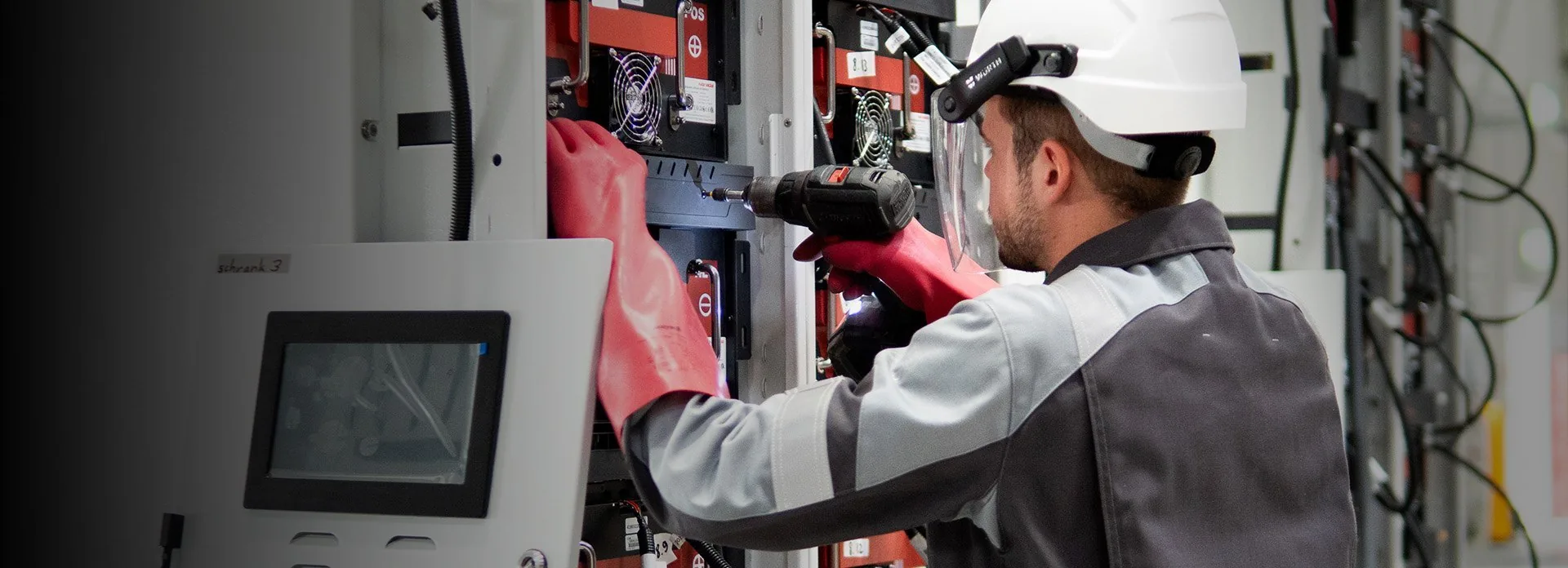
Playing the video loads it from YouTube (Google). Privacy
Watch on YouTubeEnglish subtitles
The European Battery Hub charges batteries separately from the hazardous materials warehouse on a monitored charging infrastructure, with charging programs for each battery type and defined charge limits. This keeps the batteries within the set charge window, so they leave the warehouse ready for use. At the inbound inspection gate, we already check the condition of incoming batteries. Maintenance charging is therefore part of battery logistics from a single provider.
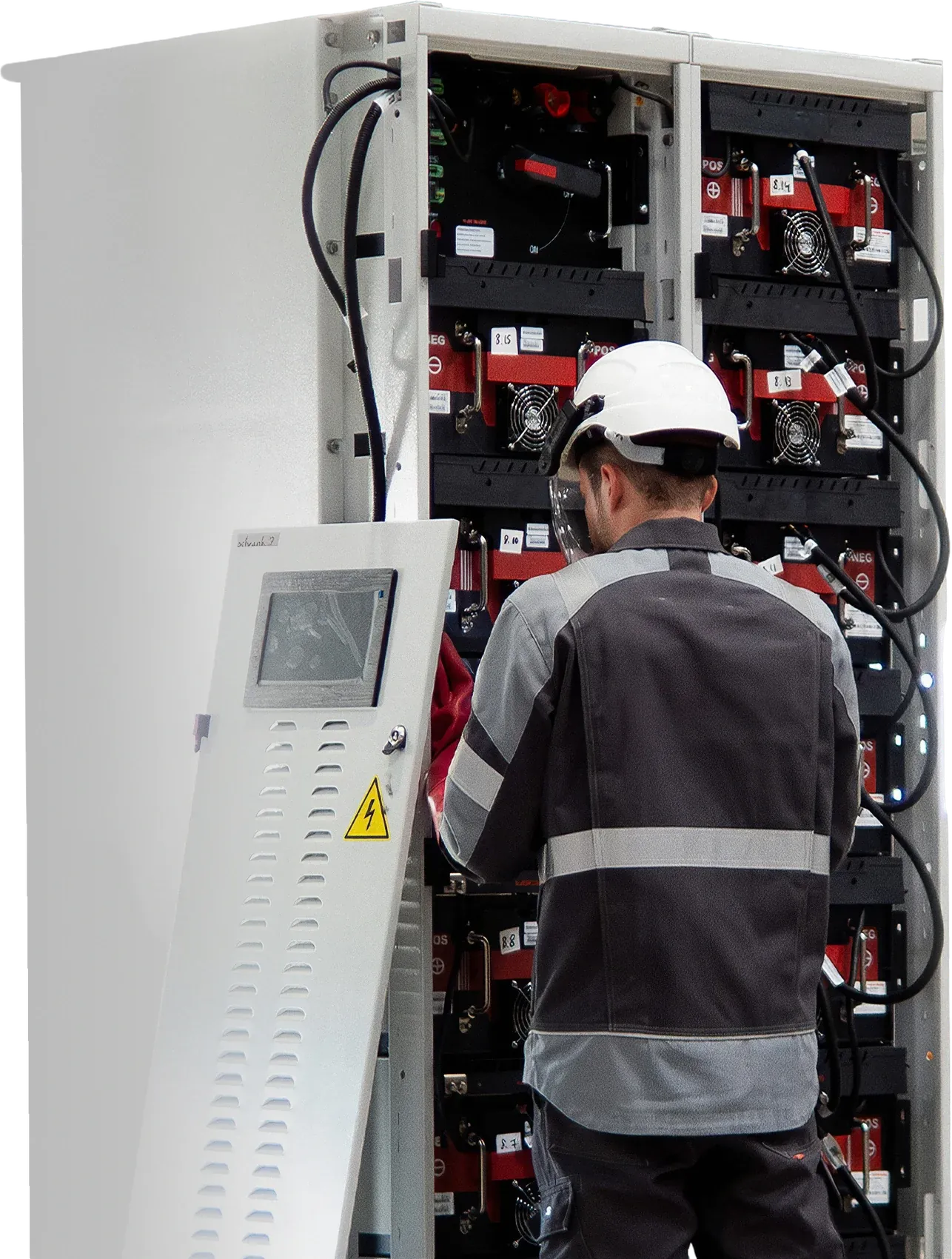
Charging batteries is not a side job for us: our own charging station has existed since 2010 and is now part of the European Battery Hub.
Charging programs for each battery type, plus capacity tests when the condition of a battery needs to be assessed.
The charge status is continuously monitored and documented at the charging station.
Charging is not storage within the meaning of TRGS 510 but a separate activity that is assessed on its own. That is why we charge separately from the hazardous materials warehouse on a monitored charging infrastructure.
Talk directly with our business development team.
We will get back to you within 24 hours on business days.
Head of Business Development

Business Development Manager

Business Development Manager
At the European Battery Hub, stored lithium-ion batteries are kept within a defined charge window that is set for each battery type. Once a battery reaches the lower limit, it is topped up as needed, and any overcharge beyond the maximum is prevented. This avoids harmful deep discharge and creeping self-discharge. Air freight has its own limits: loose lithium-ion batteries may be charged to no more than 30% there.
Read more: Battery logistics and air freight
No. Classic maintenance chargers for lead-acid batteries keep the battery under constant voltage; for lithium-ion cells this is unsuitable, because a permanently high state of charge makes them age faster. Instead, lithium-ion batteries are kept within a defined charge window and topped up only when they reach a lower limit. The European Battery Hub sets this window for each battery type and charges with charging programs on a monitored charging infrastructure.
Yes. Charging and storage are deliberately handled separately. Storing the batteries as a hazardous material follows TRGS 510 (storage of hazardous materials in transportable containers); charging does not count as storage and has to be assessed on its own, in particular for fire safety. For this, the European Battery Hub uses its own monitored charging infrastructure, kept apart from the hazardous-materials store (WGK 3, Class 9 M4), so that charge care and needs-based recharging run safely.
Read more: TRGS 510 and storage classes for lithium batteries
The condition of a battery is assessed in several steps. Already at the inbound inspection gate, incoming batteries are recorded by a temperature check. For a closer assessment of the state of health (SoH), capacity tests with suitable charging programs are used; there has been experience with this since 2010, and with the refurbishment and capacity testing of batteries since 2014. On this basis, clear go/no-go decisions are made for storage, reuse or transport to recycling, documented traceably.
Read more: Inbound inspection gate, Reverse logistics and second life
In addition to the trained staff, the European Battery Hub checks the stored battery systems around the clock with a thermal imaging drone that produces thermal images of the stock; a fire alarm system and gas detection also monitor the warehouse. The charge status is monitored continuously at the charging station, the digital twin reconciles the stock, and in the customer portal customers see their stock with photo documentation.
Read more: Thermal imaging drone, Customer portal and digital twin, How to store lithium batteries safely
Battery systems that are no longer usable or are safety-critical are taken out of the usage loop by the European Battery Hub in a controlled way and are not stored any further in Paderborn. We arrange their transport directly to certified recycling through a specialized partner with a permit for waste transport, so that collection, transport and handover are documented and verifiable without gaps.
Do you have questions or would you like to request battery care and maintenance charging? Talk to our team: call +49 5251 7207-815 or email info@european-battery-hub.com. We respond within 24 hours on business days.