Contact
Energy stored. Future delivered.

Battery Reverse Logistics

Battery reverse logistics: a specialized partner takes used lithium-ion batteries ADR-compliant to the recycler or into a second life.

In short

Battery reverse logistics: diagnosis decides between recycling and second life

Battery reverse logistics starts with collection: used and defective lithium-ion batteries are collected at the customer's site and transported in line with ADR. Batteries with enough remaining capacity get a second life, for example as stationary storage; the rest go to a certified recycler. The European Battery Hub (EBH) in Paderborn organizes this reverse chain through a specialized partner, directly from the collection point to the destination. Used, defective and waste batteries count as waste: we do not store them in Paderborn, bring them back there or consolidate them.

Reverse logistics

Two routes after diagnosis.

Condition and remaining capacity decide which route a used battery takes. We arrange transport directly from the collection point to the destination, without interim storage in Paderborn.

Transport & proof ADR-compliant through our specialized partner, directly to the recycler or into second-life use, with seamless, audit-proof documentation.

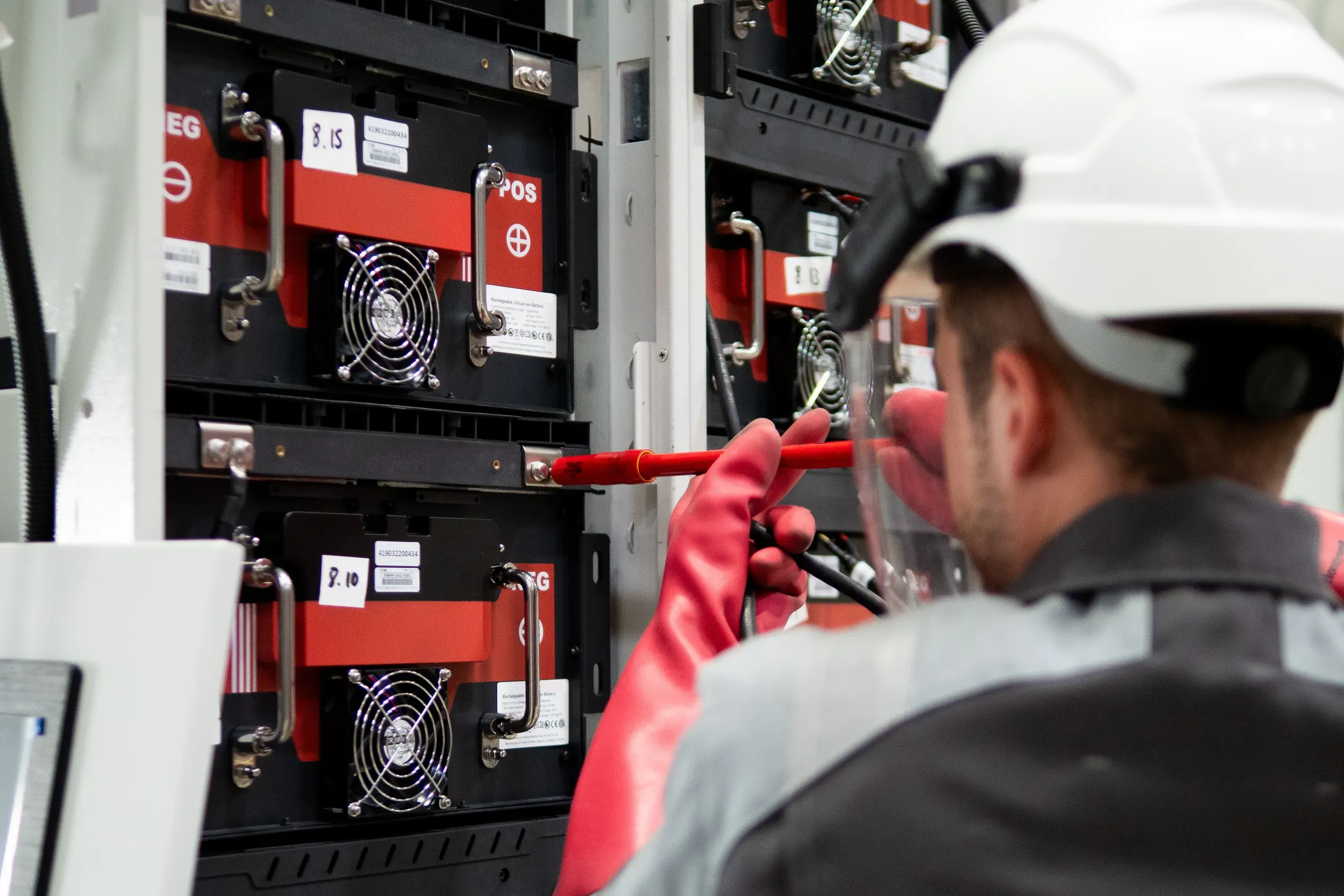
Employee in helmet, visor and protective gloves measuring lithium-ion battery modules in a storage cabinet with a test probe

Battery reverse logistics: what the EU Battery Regulation requires

The EU Battery Regulation (EU) 2023/1542 raises the bar for used batteries: manufacturers must take batteries back and meet recycling quotas, and from 18 February 2027 batteries for electric vehicles and light means of transport as well as industrial batteries above 2 kWh need a digital battery passport documenting where a battery comes from and what condition it is in.

Battery reverse logistics is the logistical answer to this. It covers the route back: from the collection point, the plant or the vehicle directly into a safe, certified chain, without interim storage in Paderborn. After diagnosis, every battery takes one of two routes. Batteries with enough remaining capacity enter a second life, for example as stationary energy storage. Batteries with no useful life left go into recycling: here they are processed into black mass, from which valuable raw materials such as lithium, nickel and cobalt are recovered.

The European Battery Hub brings the building blocks for this: ADR-compliant dangerous goods transport, an emergency response plan with the battery containment box for critical goods, and experience with battery condition: capacity tests at its own charging station have been part of Hartmann International's battery logistics since 2010, refurbishment with capacity testing and cell replacement since 2014. For recycling we work with partners: in one customer project, the EBH delivered transport containers, coordinated collection and transport to the recycler together with a partner, and recycling took place with proof of disposal.

How the reverse chain works

01

Collection

Used batteries are collected at the customer's site and packed to ADR standards. We arrange collection and transport through a specialized partner, damaged or defective batteries following the DDLB process and, where needed, in the battery containment box.

02

Classification & diagnosis

The shipper classifies the batteries by condition (intact, damaged, critically defective or waste battery); this determines the special provision and packaging. Condition and remaining capacity decide whether a second life is an option.

03

Triage

Based on the diagnosis, the decision is made in a traceable way: second life or recycling, documented also as a basis for the battery passport.

05

Transport & proof

Transport runs ADR-compliant directly from the collection point to the destination, without interim storage in Paderborn: across our dangerous goods network or, for batteries going to recycling, through our specialized partner, with seamless, audit-proof documentation.

Circular economy with proof

Reverse logistics keeps raw materials such as lithium, nickel and cobalt in circulation and turns the take-back duty into a documented process. The European Battery Hub combines this with the credentials of a dangerous goods specialist: DIN EN ISO 9001 and 14001, ADR transport to over 40 countries and an emergency response plan for the worst case. The waste-law side is covered by our specialized partner with a permit for waste transport. This lets you meet the take-back obligations of the EU Battery Regulation with a complete chain.

Contacts

Your contacts

Talk directly with our business development team.
We will get back to you within 24 hours on business days.

FAQ

Frequently asked questions about battery reverse logistics, recycling & second life

How does battery reverse logistics work?

Battery reverse logistics organizes the way back: collection of used and defective batteries from the plant, the trade or the vehicle, ADR-compliant transport directly to the destination and the decision between second life and recycling. The European Battery Hub organizes this chain through a specialized partner, from ADR transport to documented proof, without interim storage in Paderborn.

When is second life worthwhile and when is recycling the better choice for used batteries?

The diagnosis of battery condition (state of health, remaining capacity) decides. As a rough industry guide, batteries with around 70 to 80 percent remaining capacity are still considered suitable for a second life, for example as stationary energy storage; below that, recycling for raw material recovery usually makes more sense. We decide only after the condition check and document the decision.

How is a used battery's suitability for second life assessed?

The basis is a diagnosis of state of health (remaining capacity) plus a safety check for mechanical and thermal damage. Standards such as UL 1974 (repurposing), IEC 62619 (safety of industrial lithium batteries) and VDE-AR-E 2510-50 (stationary lithium-ion storage) provide the technical framework for stationary second-life storage.

Read more: Inbound inspection gate

How are batteries transported for recycling or disposal?

Undamaged waste batteries for disposal or recycling travel under ADR special provision 377 with packing instruction P909; damaged or defective batteries (DDLB) fall under special provision 376 with P908, critically defective ones under P911. Both remain Class 9 dangerous goods (UN 3480 or UN 3481). We arrange the transport in both cases through a specialized partner, critically defective goods in the battery containment box with BAM specification 15854. Our partner moves critically defective batteries in special transport boxes. Its drivers are specifically trained to handle used and damaged batteries, and the truck carries the right emergency equipment. Because defective batteries are often classed as waste, the partner holds the permit for waste transport and has a connected recycling and disposal network.

Who is allowed to transport waste batteries, and what proof of proper recovery do I receive?

Anyone who commercially collects or carries hazardous waste such as waste batteries needs a permit under Section 54 KrWG or certification as a waste management company (Entsorgungsfachbetrieb) for this activity. For the European Battery Hub, this side is covered by our specialized partner with a permit for waste transport; the EBH itself is certified to DIN EN ISO 9001 and 14001. You get a complete chain up to the proof of proper recovery, as a basis for your obligations under the EU Battery Regulation (EU) 2023/1542.

Read more: EU Battery Regulation and battery passport

How do I arrange for end-of-life or defective batteries to be collected?

After your request we provide suitable ADR-compliant collection or safety containers and, through a specialized partner, arrange collection and transport directly to second life or recycling, without interim storage in Paderborn. Defective and damaged batteries travel under the DDLB process with the emergency response plan and the battery containment box. The team responds to requests within 24 hours on business days.

Read more: Battery containment box

Build the battery loop with us

Whether it is a take-back duty, a second-life project or routing to recycling, talk to our team about your battery reverse logistics solution. Call +49 5251 7207-815 or email info@european-battery-hub.com. We respond within 24 hours on business days.

Response
within 24 hours on business days