01
Declaration
We declare your batteries correctly under customs law. You provide the commodity code, origin and any required supporting documents, including for imports from China.

Customs clearance for lithium-ion batteries in Paderborn, with a temporary storage facility for up to 90 days and a bonded warehouse on application.
Customs clearance for batteries covers the customs declaration, storage under customs supervision and the release or re-export of imported batteries; the customs process is basically the same for lithium-ion and other batteries. At the European Battery Hub (EBH) in Paderborn, Germany, the temporary storage facility for up to 90 days is approved and in operation. If needed, we apply for a bonded warehouse with no time limit, duty-free on re-export to non-EU countries such as Switzerland, with 2 to 3 months of lead time. Customs clearance, dangerous goods transport and the hazardous materials warehouse come together at one site.
A bonded warehouse is a customs-authorized facility where imported goods are stored without import duty and import VAT becoming due straight away. The charges fall due only on clearance, for example on sale or call-off.

Lithium-ion accumulators are classified under tariff subheading 8507 60 (CN code 8507 60 00); the applicable duty rate is shown in the German Electronic Customs Tariff (EZT). Importers need an EORI number, and in Germany the customs declaration is filed electronically via ATLAS. Independently of customs, we need the safety data sheet and the manufacturer's UN 38.3 test summary for each item for storage and transport. Anyone placing batteries on the German market for the first time must also register with Stiftung EAR beforehand (more on the EU Battery Regulation).
The advantage lies in the way everything connects: because the European Battery Hub handles storage, dangerous goods transport and customs from a single source, there are no interfaces, waiting times or duplicate handling. Your batteries are checked at goods receipt, treated correctly under customs law and, where required, moved on straight away in full ADR compliance.
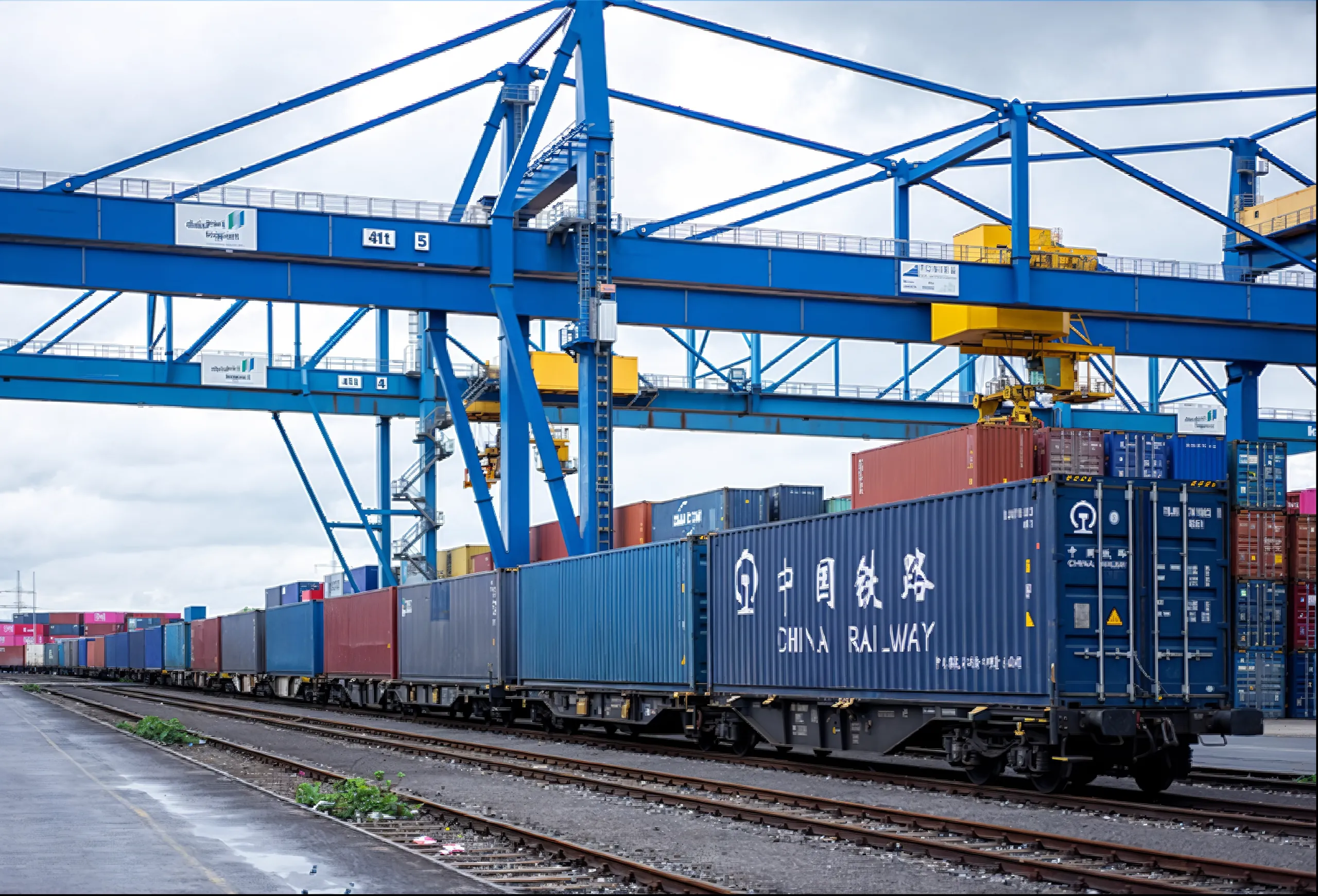
How goods reach us from overseas by ship, plane or rail is described on the page sea freight and overseas. Industry solutions for importers: logistics for battery manufacturers and e-mobility batteries.
Import duties fall due only when the goods are cleared, for example on sale or call-off: up to 90 days in temporary storage, with no time limit in a bonded warehouse, which we apply for if needed.
On re-export from the bonded warehouse to non-EU countries such as Switzerland or the United Kingdom, import duties are waived entirely.
Customs clearance, storage in the hazardous materials warehouse and ADR transport at one site in Paderborn, with no waiting times or storage charges at the port.
In the temporary storage facility, goods wait up to 90 days without immediate duties. They are then cleared, or they leave the bonded warehouse, which we apply for when needed, duty-free for a non-EU country such as Switzerland.
In both models, import duties fall due later or not at all. They differ in storage period and duties.
Best suited forfast customs clearance
Due only on clearance, for example on sale or call-off. This protects your cash flow.
Clearance takes place inland, so waiting times and storage charges at the port fall away.
Best suited forstorage and re-export
Waived entirely on re-export to non-EU countries such as Switzerland or the United Kingdom.
Goods under customs control can stay without time limit until it is clear whether they remain in the EU or travel on.
From declaration to onward transport: five steps at one site in Paderborn.
We declare your batteries correctly under customs law. You provide the commodity code, origin and any required supporting documents, including for imports from China.
At the inbound inspection gate, batteries undergo a temperature check before they are put into storage; oversized goods go through their own goods receipt processes.
In the temporary storage facility (up to 90 days) or, once approved on our application, in the bonded warehouse (no time limit), stored safely in our hazardous materials warehouse.
We handle clearance, optimize the timing of the import duties and make the goods available.
Cleared goods move straight into ADR-compliant dangerous goods transport, to over 40 countries.
The European Battery Hub, powered by Hartmann International, combines customs clearance, dangerous goods transport and storage at one site in Paderborn. With dangerous goods, this matters: your batteries stay in one continuously controlled, certified chain without changing between several service providers.
Our team advises you personally on the most cost-efficient, cash-flow-friendly solution for your import and export shipments.
One site in Paderborn
How an international importer consolidates its battery supply chain
For an importer, the European Battery Hub combines delivery from international production sites, customs clearance, safe interim storage and onward distribution to customers in Europe at a single interface.
An importer sources batteries from international production sites. Arrivals by ship or rail have to be coordinated with customs clearance, storage capacity and onward distribution to customers in Europe.
One central interface for customs, storage and distribution, more leeway between import and customer call-off, and better consolidated transport.
Paderborn lies on the A33 motorway with fast connections to the A2 and A44. The seaports of Hamburg, Antwerp, Rotterdam and Amsterdam and the inland port of Duisburg are within easy reach, backed by a Europe-wide transport network.
Importing batteries into Europe?Find out with us how a central storage and distribution solution can support your supply chain.
Request a quoteTalk directly with our business development team.
We will get back to you within 24 hours on business days.

Head of Business Development

Business Development Manager

Business Development Manager
In two steps. First, the goods are declared to customs, with the commodity code, origin and supporting documents you provide. Then they are released for free circulation or placed in a bonded warehouse or temporary storage. The five steps at the European Battery Hub are shown in the section “How your customs clearance works”. The EBH handles imports from Asia, and from China in particular, from start to finish.
Goods can stay in temporary storage for up to 90 days and in a bonded warehouse without time limit. The section “Bonded warehouse and temporary storage” above compares storage period, duties and benefits of both models.
Yes, provided the dangerous goods and storage regulations are met. The European Battery Hub stores goods under customs control in its hazardous materials warehouse (WGK 3, Class 9 M4), where lithium-ion batteries are kept safely under FM Global fire protection and an emergency response concept. Under customs law, the UN 38.3 evidence plays no role. This brings temporary customs storage and dangerous goods compliant battery storage together at one site, an advantage over pure customs service providers without their own hazardous materials warehouse.
Read more: Hazardous materials warehouse for batteries
No. If the goods are exported from the bonded warehouse back to a non-EU country, for example to Switzerland or the United Kingdom, the EU import charges never arise in the first place, because the batteries are never released into the EU's duty-paid and tax-paid free circulation. This duty-free re-export is the central cost advantage of the bonded warehouse for battery traders with international sales.
That depends on the type of bonded warehouse: a public bonded warehouse can be used by several depositors, a private one is reserved for the holder of the authorization. Which option suits your shipments and what you need for it, we clarify with you before the first import. We set up new customers in our warehouse management system within one to two days, including item master data, so we can then start at short notice in the temporary storage facility.
There is no flat rate. The cost is made up of the import charges and the handling effort. The decisive factors are the customs value of the goods, the duty rate for the commodity code, import VAT, the number of items in the customs declaration and the storage period. We prepare a quote for your specific import and get back to you on business days within 24 hours of your request.
Read more: Request a quote
The main routes are release for free circulation (clearance with payment of duties), storage in a bonded warehouse, temporary storage for up to 90 days, transit, which lets uncleared goods travel on, for example from the seaport inland (T1 via NCTS), and re-export to a non-EU country. Which route fits depends on whether the batteries stay in the EU or travel on.
Free zones are enclosed areas within the customs territory of the Union, usually in ports, where non-Union goods can be stored without import duties being levied. A bonded warehouse, by contrast, requires an authorization from customs and can also be set up inland. German customs publishes which free zones exist in Germany.
Read more: zoll.de (German customs)
Import from China, export to non-EU countries or customs warehousing, talk to our team. We find the most cost-efficient and cash-flow-friendly solution for your shipments.
Call +49 5251 7207-815 or email info@european-battery-hub.com. We respond within 24 hours on business days.