
Marcel Niebuhr
Head of Business Development

Logistics for grid-scale battery storage: we deliver modules and spare parts ADR-compliant to the site and store them in Paderborn if required.
Logistics for grid-scale battery storage covers project delivery, interim storage and replacement of stationary battery energy storage systems (BESS), from a single rack to the BESS container. The European Battery Hub (EBH) in Paderborn, Germany, transports these systems as Class 9 dangerous goods under ADR to more than 40 countries and stores modules and systems in its hazardous materials warehouse with 20,300 m² and 45,000 storage spaces.
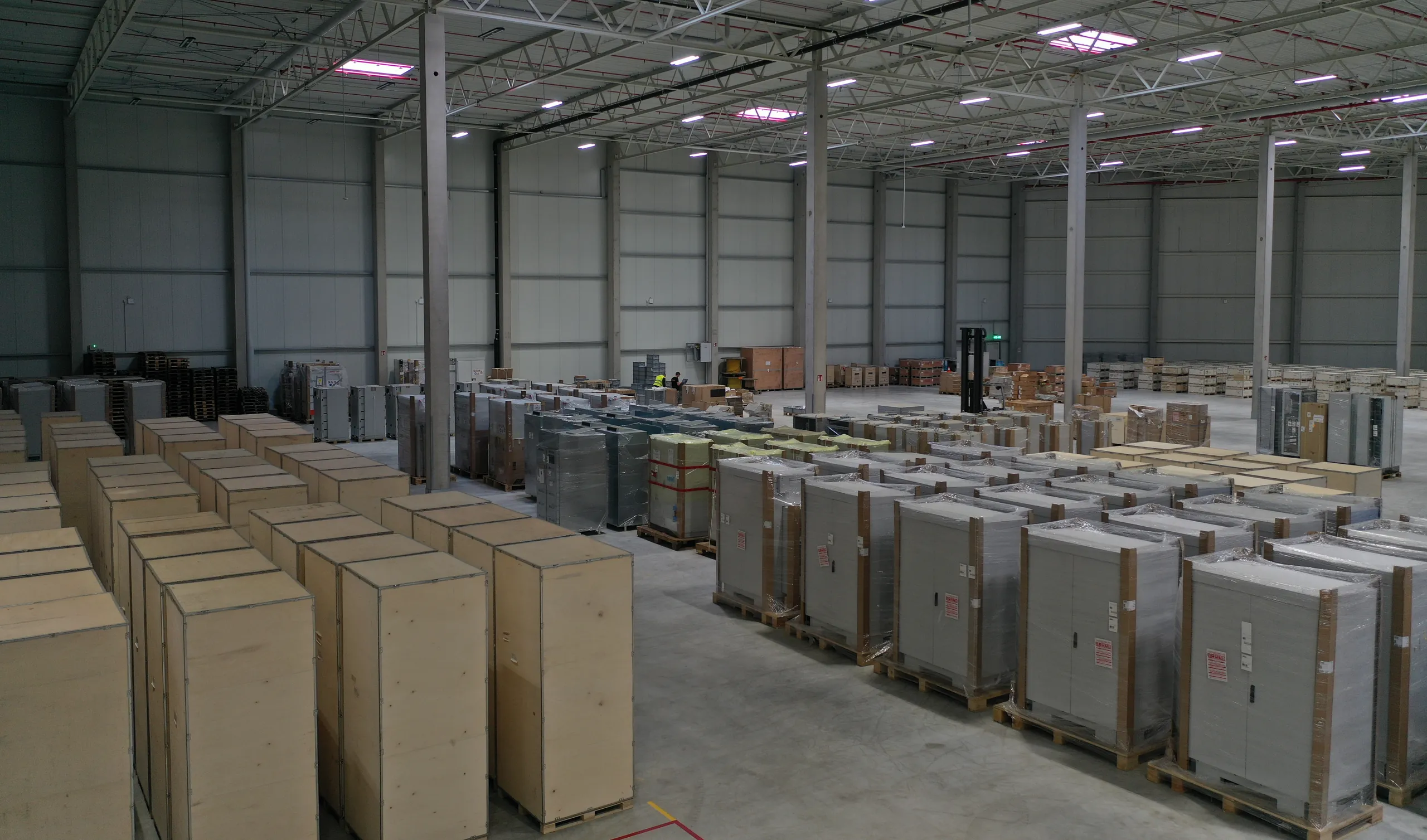
Grid-scale battery storage means stationary battery energy storage systems (BESS) for the grid, industry or commerce, usually built from lithium-ion modules in storage cabinets or containers. In logistics terms, weight and dangerous goods rules matter most: in the large-scale storage project from 2025, each of the 420 storage systems weighed 8.5 tonnes, and 210 truckloads were needed to store them.
For transport: lithium-ion batteries and modules shipped on their own fall under UN 3480, batteries packed with or contained in equipment under UN 3481, and systems permanently installed in a cargo transport unit, such as a fully fitted BESS container, under UN 3536. The difference between UN 3480 and UN 3481 is explained on the page dangerous goods Class 9; more on container transport under BESS logistics.
Stationary grid-scale battery storage, from grid storage and industrial storage to commercial storage, stabilizes the power grid and buffers wind and solar energy. Yet a BESS project is demanding in logistics terms: it involves heavy containers and racks subject to dangerous goods rules, precise delivery windows at often hard-to-reach locations and the safe handling of large amounts of energy.
The European Battery Hub understands both sides, the dangerous goods requirements of lithium-ion storage and the practice of project logistics. We coordinate delivery to the installation date, store modules and spare parts safely in the meantime and organize the replacement of modules. A specialized partner takes used or defective modules directly to recycling. In this way, BESS manufacturers and storage operators gain a logistics partner that accompanies the project from delivery through to replacement.
This is backed by more than 170 years of logistics experience at Hartmann International and an ADR network that reaches more than 40 countries.
From the first delivery to transport for recycling, combined in a modular way.
Coordinated delivery of battery storage containers, racks and modules to the site, with time-slot control and heavy-load handling.
Request project logistics02Delivery of replacement modules, interim storage of components and spare parts, and provision on call-off for commissioning and maintenance.
To maintenance charging03ADR-compliant transport of large lithium-ion storage systems (Class 9) to more than 40 countries, with trained personnel and complete documentation.
To dangerous goods transport04Buffer storage of modules and spare parts in the hazardous materials warehouse in Paderborn, with fire protection and thermal imaging monitoring.
To the hazardous materials warehouse05A specialized partner takes used and defective storage modules directly from the site to reuse or recycling, with no interim storage in Paderborn.
To reverse logistics06Safe handling of critically defective storage modules with an emergency response plan and early warning from the thermal imaging drone.
To the emergency response plan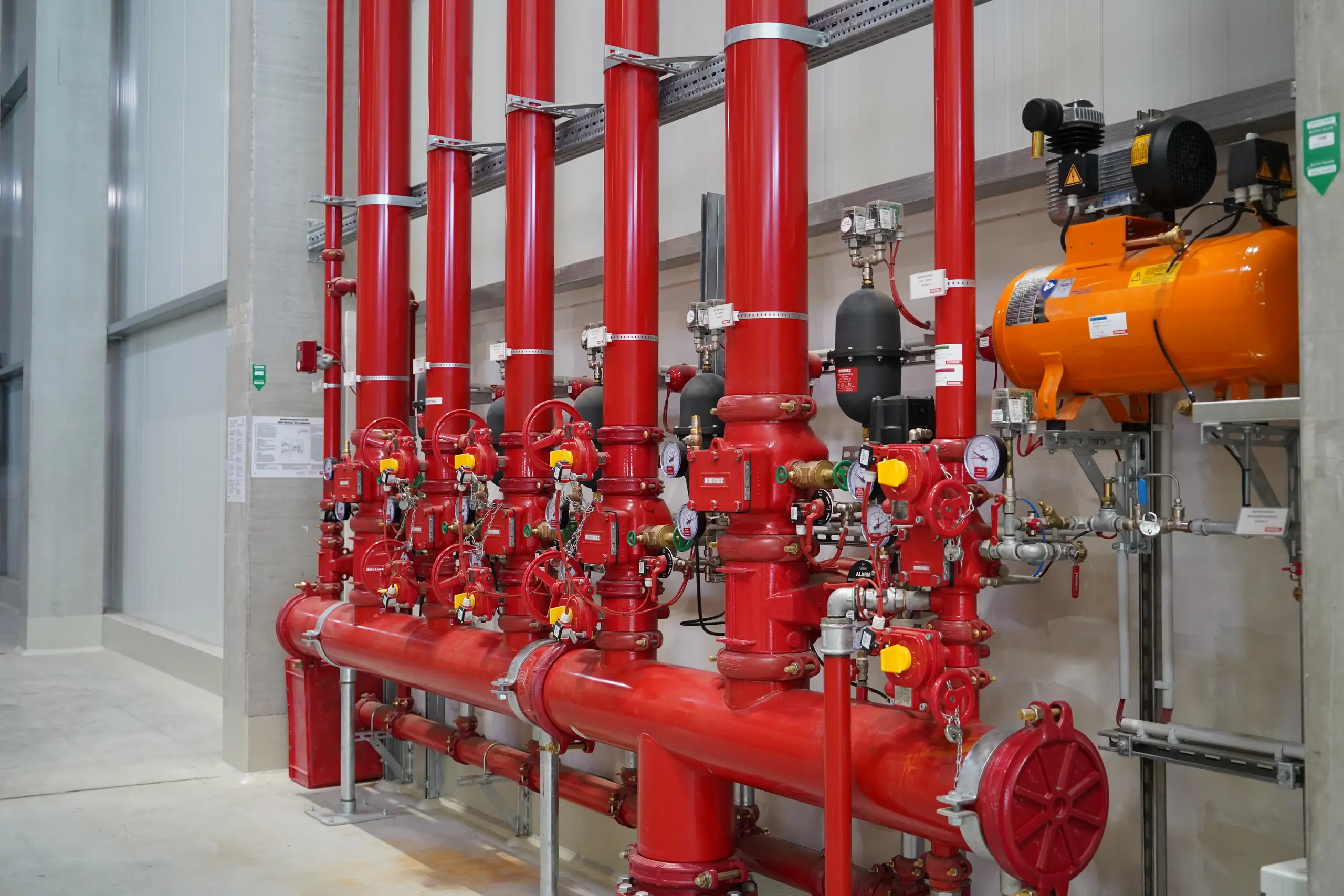
The larger the storage system, the higher the stored energy, and the more important a well-considered safety concept becomes. The EBH consistently treats BESS modules as Class 9 dangerous goods. Transport, packaging and documentation run in compliance with ADR; damaged or defective modules (DDLB) are handled according to the packaging rules laid down for them.
In the hazardous materials warehouse in Paderborn, an FM Global sprinkler system and a fire water tank holding around 1 million liters protect interim storage, and the thermal imaging drone detects thermal anomalies early. The certified management system (DIN EN ISO 9001 and 14001) makes the supply chain traceable for operators and authorities.
Which logistics service matters in which project phase.
Source containers, racks and modules
EBH: customs clearance, goods receipt, dangerous goods checkOn-time delivery to often hard-to-reach locations
EBH: project logistics with time-slot control, ADR transportProvide replacement and additional components
EBH: interim storage, call-off on demandDeliver replacement modules, take defective modules to recycling
EBH: replacement logistics, transport of defective modules through partnersBring modules safely to reuse or recycling
EBH: transport through partners directly to reuse or recycling
How a system integrator organizes project logistics for battery storage
For a provider of stationary energy storage, the European Battery Hub consolidates components from several suppliers, stores the batteries safely in between and delivers on the agreed date for each project.
A provider of stationary energy storage runs several projects in parallel. Battery modules, inverters and other components come from different suppliers. The construction sites, however, can only accept the goods on fixed dates.
Delivery dates are easier to coordinate, the organizational effort goes down, and battery logistics runs through one central interface.
Running storage projects and need flexible logistics capacity?Plan your project logistics with the EBH.
Request a quoteTalk directly with our business development team.
We will get back to you within 24 hours on business days.
Head of Business Development

Business Development Manager

Business Development Manager
The European Battery Hub handles logistics for grid-scale battery storage across the entire lifecycle from one source: procurement and import, project delivery to the site, replacement logistics, ADR dangerous goods transport and the transport of used modules to recycling through a specialized partner. The basis is the hazardous materials warehouse in Paderborn with 20,300 m² of storage space and 45,000 storage spaces. This gives BESS manufacturers and storage operators a single, specialized logistics partner for every project phase.
Above all, a large-scale battery storage project needs planning for heavy units and fixed dates: bundling components from several suppliers, safe interim storage of the batteries, heavy-load handling and scheduled delivery to the installation site, plus ADR transport as Class 9 dangerous goods. The European Battery Hub has carried out these steps in projects, for example when storing 420 systems weighing 8.5 tonnes each.
Read more: Case studies
Yes. Lithium-ion based grid-scale storage systems count as Class 9 dangerous goods (M4) and are carried under ADR. Batteries and modules shipped on their own fall under UN 3480, batteries packed with or contained in equipment under UN 3481, and systems permanently installed in a cargo transport unit, such as a fully fitted BESS container, under UN 3536. We transport them with trained and certified personnel and complete dangerous goods documentation to more than 40 countries.
Read more: BESS logistics
We deliver storage containers, racks and modules as coordinated project logistics with time-slot control and heavy-load handling, so that even heavy units arrive on time and at hard-to-reach locations. For oversized dimensions and high weights, we draw on abnormal-load and heavy transport as well as heavy-load handling from the Hartmann group. Import and overseas flows are organized multimodally by road, rail, sea and air (ARA ports, Hamburg, Duisburg).
BESS modules, components and spare parts are stored in the hazardous materials warehouse in Paderborn, which is designed for water hazard class WGK 3 and dangerous goods Class 9 (M4) and is equipped with an FM Global sprinkler system and a fire water tank holding around 1 million liters. A thermal imaging drone checks the stock around the clock with thermal imaging, and a fire alarm system and gas detection monitor the warehouse, complemented by a clear emergency response plan and the battery containment box with BAM specification 15854. We provide replacement modules on call-off for commissioning and maintenance.
Used and defective storage modules do not come to Paderborn. A specialized partner with a permit for waste transport collects them on site and takes them, depending on their condition, to reuse or recycling. Damaged or defective modules (DDLB) are handled according to the Class 9 packaging rules and, where necessary, transported in the battery containment box. We document the transport in a traceable way for operators and authorities.
Yes. Stationary grid-scale storage counts as industrial batteries with a capacity above 2 kWh and is therefore subject, under the EU Battery Regulation (EU) 2023/1542, to the digital battery passport requirement from 18 February 2027. We support storage operators with complete documentation and traceability along transport and storage, and thus provide the data needed for the battery passport and the associated proof obligations.
Read more: EU Battery Regulation and battery passport
Whether delivery, interim storage or replacement, talk to our team about the logistics for your stationary grid-scale storage. We plan every project phase with you. Call +49 5251 7207-815 or email info@european-battery-hub.com. We respond within 24 hours on business days.