01
Main leg
The batteries arrive by sea or rail from the countries of production, as Class 9 dangerous goods under the IMDG Code or RID.

Sea freight for lithium batteries under the IMDG Code via the ARA ports and Hamburg, with dangerous goods storage and customs in Paderborn.
Sea freight for batteries is the transport of lithium-ion batteries as Class 9 dangerous goods in ocean containers, governed by the IMDG Code. The European Battery Hub (EBH) in Paderborn does not operate ships, but organizes the sea leg to Antwerp, Rotterdam, Amsterdam and Hamburg with partners. The EBH drives the road to the seaport with its own ADR fleet and itself handles dangerous goods storage and customs in Paderborn.
An international battery transport rarely uses a single mode. Intermodal transport connects road transport from the plant or warehouse to the seaport, the sea freight, an air or rail leg where needed, and delivery to the destination address. The European Battery Hub plans this chain so that the batteries are treated as Class 9 dangerous goods throughout, under the rules of each leg.
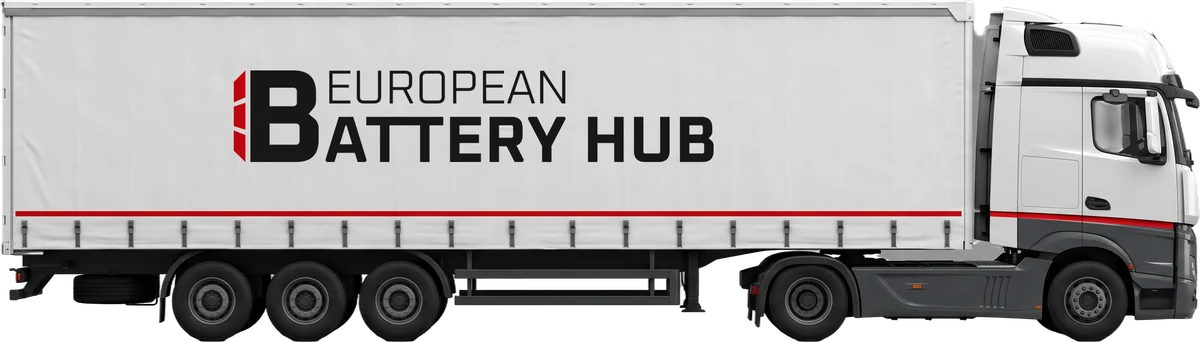
For the sea leg, the EBH uses the short routes to the seaports of Antwerp, Rotterdam, Amsterdam and Hamburg; Duisburg is connected as an inland port and rail hub, and Paderborn via the A33, A2 and A44 motorways. The EBH runs the road legs, to the seaport and on to the destination address, with its own ADR fleet as dangerous goods transport and through the partners of CargoLine, in which Hartmann International is a shareholder. Sea and air freight are organized through established partners, with track and trace and express options on request.
At sea, ADR does not apply; the IMDG Code (International Maritime Dangerous Goods Code) of the International Maritime Organization (IMO) does. It is mandatory under the SOLAS Convention and sets out, for each dangerous good, the requirements for packing, container traffic, stowage and the segregation of incompatible goods on board; in Germany it is implemented by the GGVSee. The classification stays the same: lithium-ion batteries are Class 9, UN 3480 on their own, UN 3481 in or packed with equipment, and UN 3536 when installed in a cargo transport unit.
A shipment needs a transport document with the particulars required by section 5.4.1 of the IMDG Code (dangerous goods declaration) and, for the packed container, the container packing certificate under section 5.4.2, issued by whoever packs the container. In addition, there are approved packagings, labels and marks, and the shipping line must accept the dangerous goods booking. On the road to and from the port, ADR continues to apply. Classification, packaging and documents are the consignor's responsibility; we agree with you for every shipment what the sea route requires.
Which route fits depends on the destination country, the volume, the timeframe and the dangerous goods rules. Classification as Class 9 stays the same on every route; the regulation changes with the mode of transport. Which mix the European Battery Hub organizes for your shipment is something we clarify up front.
Main transport to third countries by sea, suited to large shipments.
What the EBH organizesOrganization via the seaports of Antwerp, Rotterdam, Amsterdam and Hamburg, customs in Paderborn.
Fast option, strictly regulated for lithium batteries: UN 3480 on cargo aircraft only and at no more than 30 % state of charge.
What the EBH organizesOrganization through vetted partners under the applicable dangerous goods rules, documentation included.
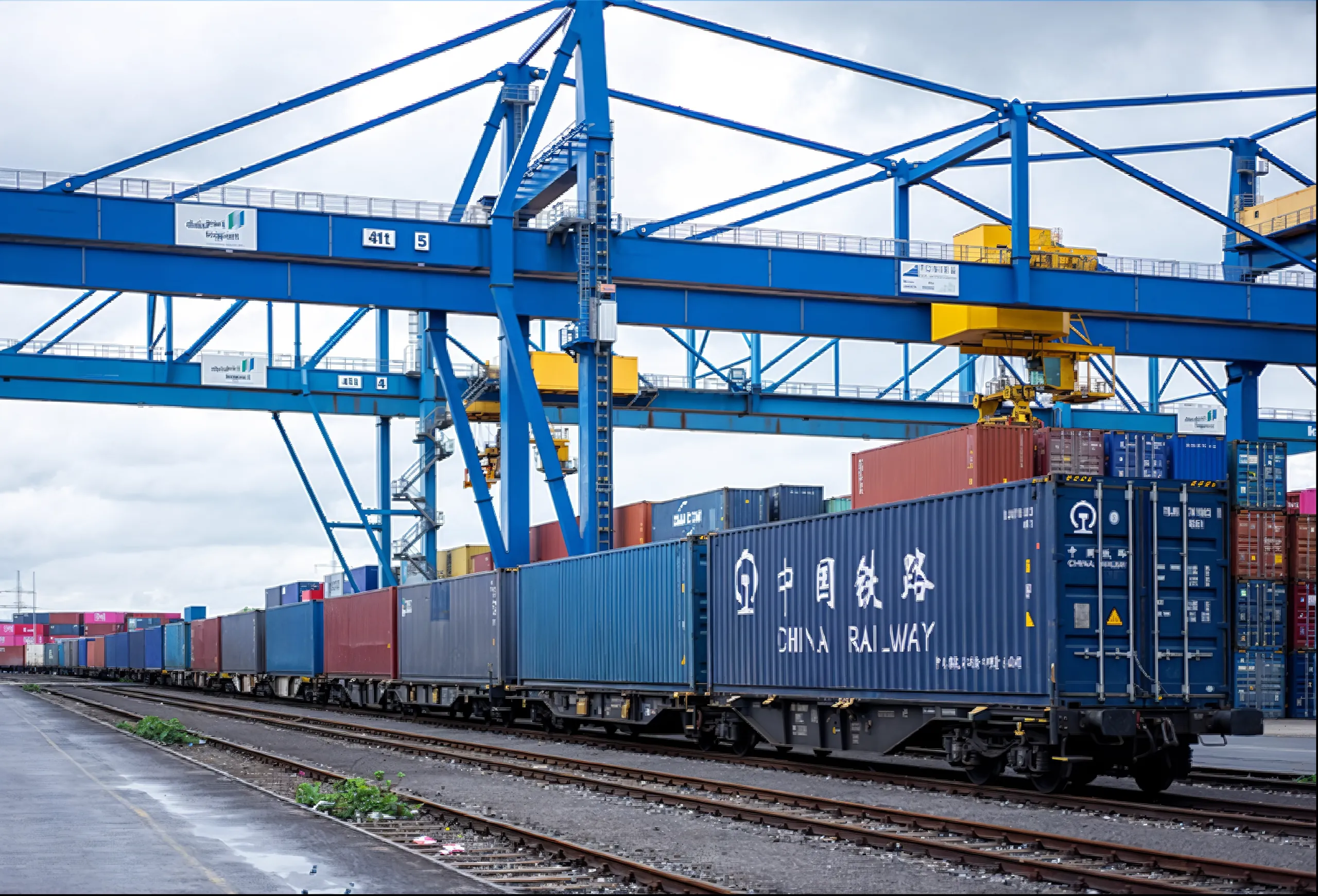
Land connection, among others for routes between Europe and Asia.
What the EBH organizesIntegration of the rail leg into the intermodal chain, for example via the Duisburg rail hub.
Road transport and distribution across Europe.
What the EBH organizesThe EBH's own ADR fleet, dangerous goods transport to more than 40 countries.
The European Battery Hub organizes the sea leg via Antwerp, Rotterdam, Amsterdam and Hamburg; Duisburg is connected as an inland port and rail hub. From the port onwards ADR applies: the EBH drives the road from the seaport to Paderborn with its own ADR fleet, followed by dangerous goods storage and customs there.
From the seaport to distribution in Europe, in five steps.
The batteries arrive by sea or rail from the countries of production, as Class 9 dangerous goods under the IMDG Code or RID.
Arrival at a seaport such as Antwerp, Rotterdam, Amsterdam or Hamburg, or for rail services in Duisburg, for example; from there ADR applies on the road. The EBH drives the road from the seaport to Paderborn with its own ADR fleet.
In the customs holding warehouse in Paderborn, goods can stay for up to 90 days without immediate duties; customs clearance takes place inland, with no waiting at the port.
Interim storage in the hazardous materials warehouse (WGK 3, Class 9 M4), uncleared in the customs holding warehouse for up to 90 days or, on application, in the bonded warehouse with no time limit, for example until re-export.
Onward distribution to your customers in Europe with our own ADR fleet and through the CargoLine partners.
International battery transports stand or fall on paperwork and timing. Because the European Battery Hub bundles storage, dangerous goods handling, customs service and transport in one place, these steps mesh instead of sitting with several separate providers. Inbound or outbound overseas shipments can be held directly in the hazardous materials warehouse (WGK 3, Class 9 M4).
For customs, a customs holding warehouse with up to 90 days of storage is available; if needed, we apply for a bonded warehouse for batteries with no time limit. Goods from third countries can be stored and later re-exported free of duty, for example to Switzerland. As a rule, the battery type must have passed the UN 38.3 tests before shipment.
How an international importer consolidates its battery supply chain
For an importer, the European Battery Hub combines delivery from international production sites, customs clearance, safe interim storage and onward distribution to customers in Europe at a single interface.
An importer sources batteries from international production sites. Arrivals by ship or rail have to be coordinated with customs clearance, storage capacity and onward distribution to customers in Europe.
One central interface for customs, storage and distribution, more leeway between import and customer call-off, and better consolidated transport.
Paderborn lies on the A33 motorway with fast connections to the A2 and A44. The seaports of Hamburg, Antwerp, Rotterdam and Amsterdam and the inland port of Duisburg are within easy reach, backed by a Europe-wide transport network.
Importing batteries into Europe?Find out with us how a central storage and distribution solution can support your supply chain.
Request a quoteTalk directly with our business development team.
We will get back to you within 24 hours on business days.

Head of Business Development

Business Development Manager

Business Development Manager
No. The European Battery Hub operates no ships or aircraft of its own. It organizes the international, intermodal transport of batteries via the seaports of Antwerp, Rotterdam, Amsterdam and Hamburg and the inland port and rail hub of Duisburg, drawing on its own network and vetted partners. The EBH drives the road to the seaport with its own ADR fleet and takes care of dangerous goods handling, storage and customs itself in Paderborn.
For overseas transport the European Battery Hub mainly uses the ARA ports of Antwerp, Rotterdam and Amsterdam as well as the seaport of Hamburg. Duisburg is connected as an inland port and rail hub. The Paderborn site is linked via the A33, A2 and A44 motorways, so the route to the seaports stays short and plannable.
Yes. Lithium batteries are Class 9 dangerous goods (M4), depending on design UN 3480 (batteries on their own), UN 3481 (in or with equipment) or UN 3536 (installed in a cargo transport unit). The IMDG Code applies at sea, the IATA DGR in the air, RID on rail and ADR on the road. As a rule, the battery type must have passed the UN 38.3 tests; classification and transport documents are the consignor's responsibility, and the European Battery Hub can take care of marking.
Read more: Dangerous goods transport
Yes. The offer includes a customs holding warehouse with up to 90 days of storage; if needed, we apply for a bonded warehouse with no time limit, with 2 to 3 months of lead time. Goods from third countries can be stored and later exported again free of duty, for example to Switzerland. Customs, storage and transport therefore mesh together at one site.
Read more: Customs service and bonded warehouse
By road, the European Battery Hub carries batteries as dangerous goods to more than 40 countries. For overseas destinations we organize sea freight, air freight and rail through partners. We serve all overseas destinations, with a focus on China and Asia, and we also handle shipments to the Americas; which route is possible for your destination country is something we clarify with your inquiry. Hartmann International is a shareholder in CargoLine and dispatches 400 vehicles per day.
That depends on the route, the shipping line and the sailing schedule. On top of the sea passage come the route to and from the port, port handling, the shipping line's acceptance of the dangerous goods booking and customs clearance. We give you a reliable schedule once we have your inquiry with destination country, volume and preferred date.
There is no flat rate. Costs depend mainly on the route and container size, the shipping line's dangerous goods surcharge, packaging and documents, transport to and from the port, storage time and customs clearance. We calculate every shipment individually and respond within 24 hours on business days.
Tell us the destination country, the volume and the timeframe, and the European Battery Hub team will plan the right intermodal route by sea, air, rail and road, compliant with the dangerous goods rules and with customs from a single source. We respond within 24 hours on business days.