Can we store lithium-ion batteries in our existing warehouse?
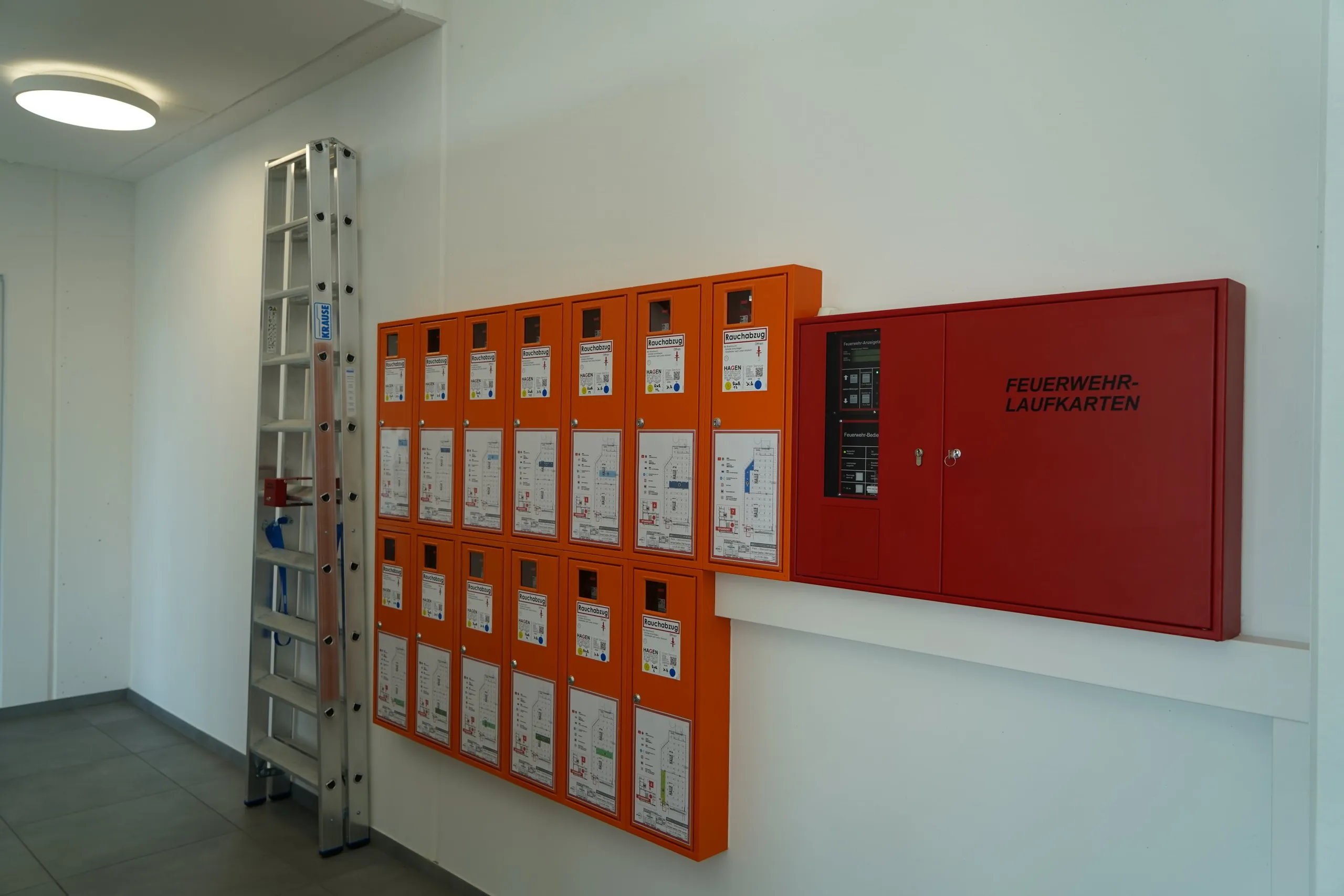
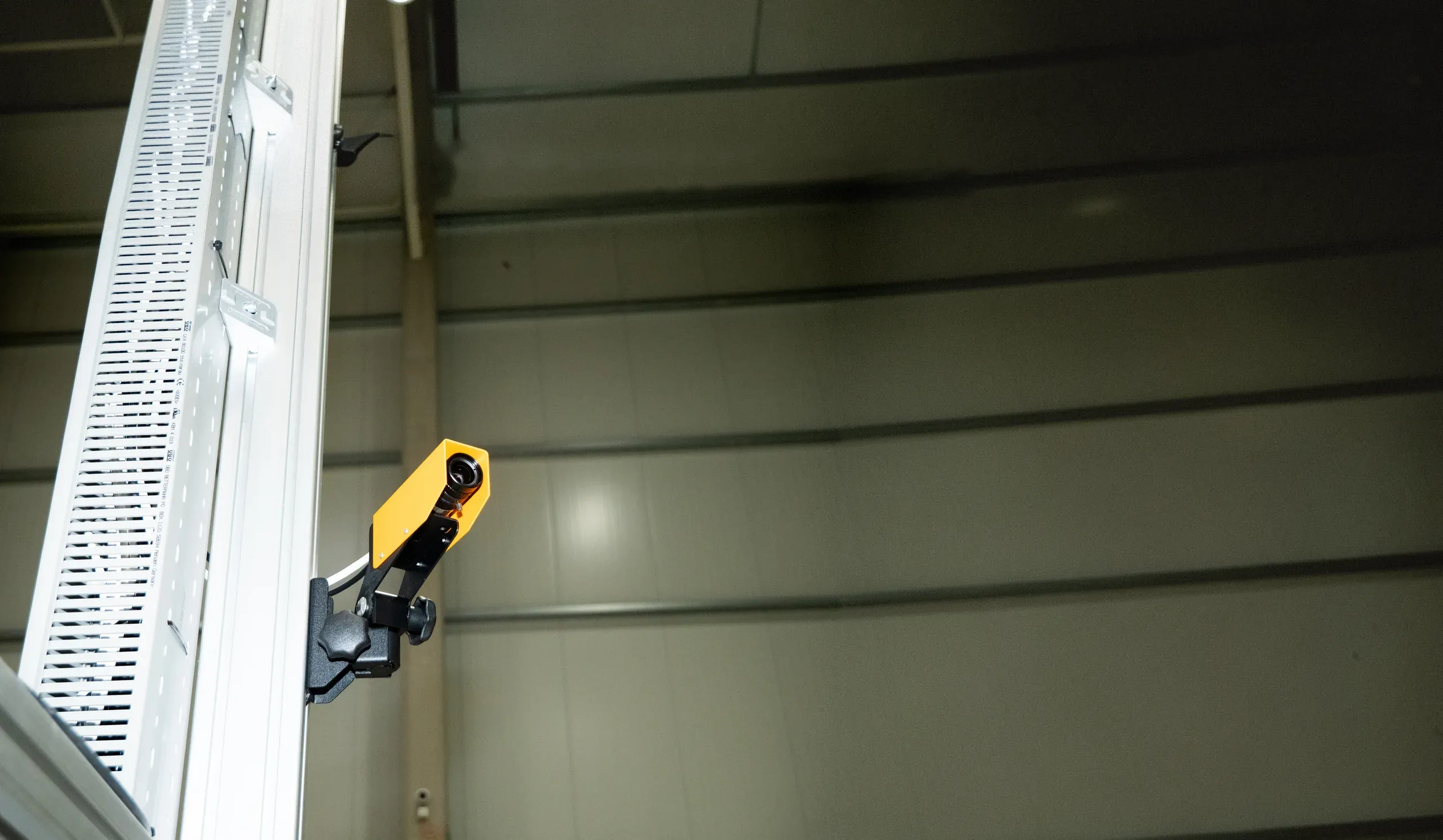
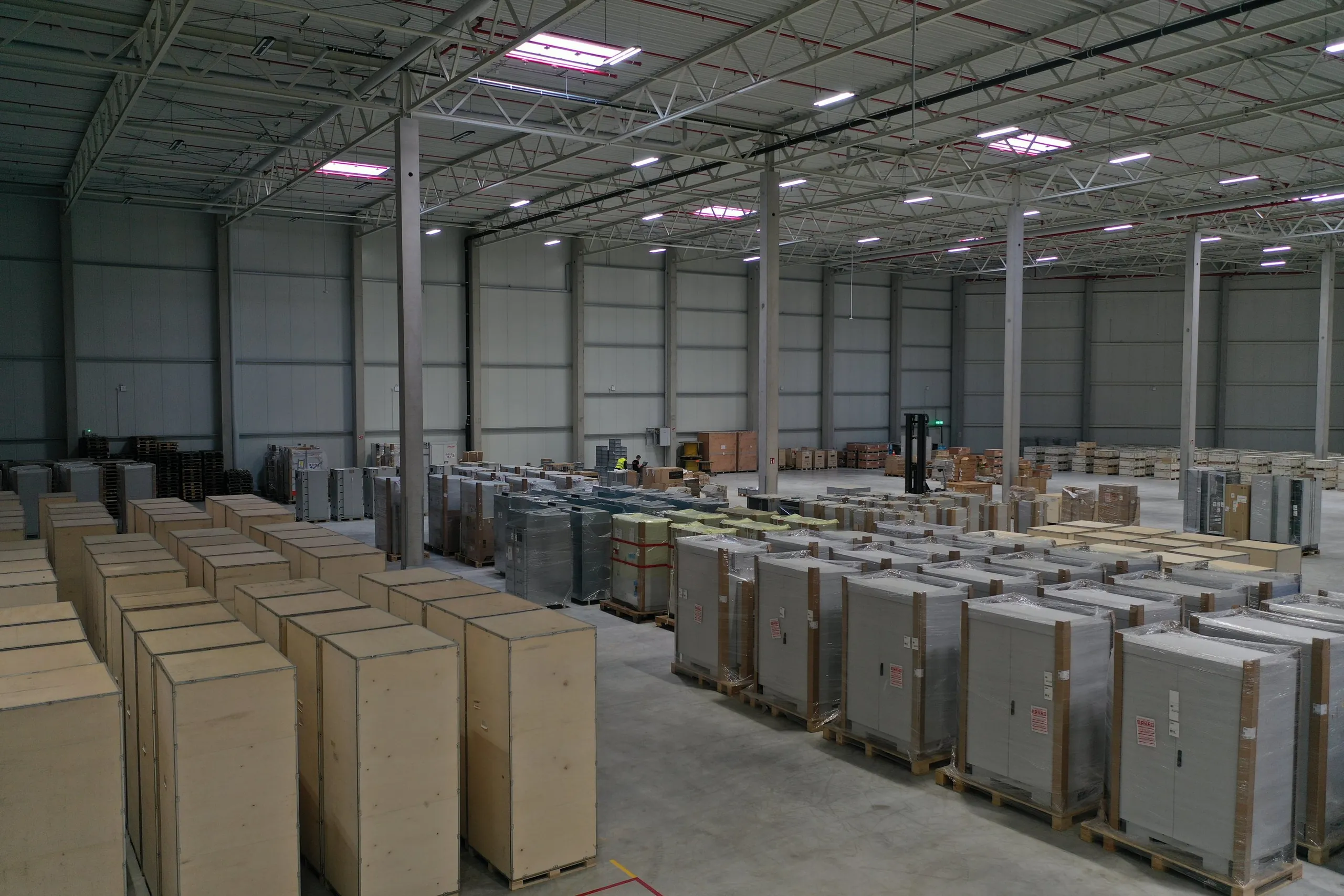
Only under certain conditions. Germany has no dedicated law on storing lithium batteries; what counts is the risk assessment, building law and the requirements of the property insurer. The German Social Accident Insurance (DGUV) recommends clarifying larger storage quantities with the building authority or fire safety office in advance and involving the insurer early. Insurers usually follow the VdS 3103 information sheet, which, depending on the performance class, requires separation distances or fire-resistant partitions and a fire alarm system. The EBH has stored lithium-ion batteries since 2018, today in a hazardous materials warehouse with FM Global sprinklers, a fire alarm system, gas detection and a round-the-clock thermal imaging check by drone.
Read more: Insurable battery warehouse, TRGS 510 and storage classes, Case study: central storage for a battery manufacturer
Who collects damaged lithium batteries in an emergency, including elsewhere in Europe?
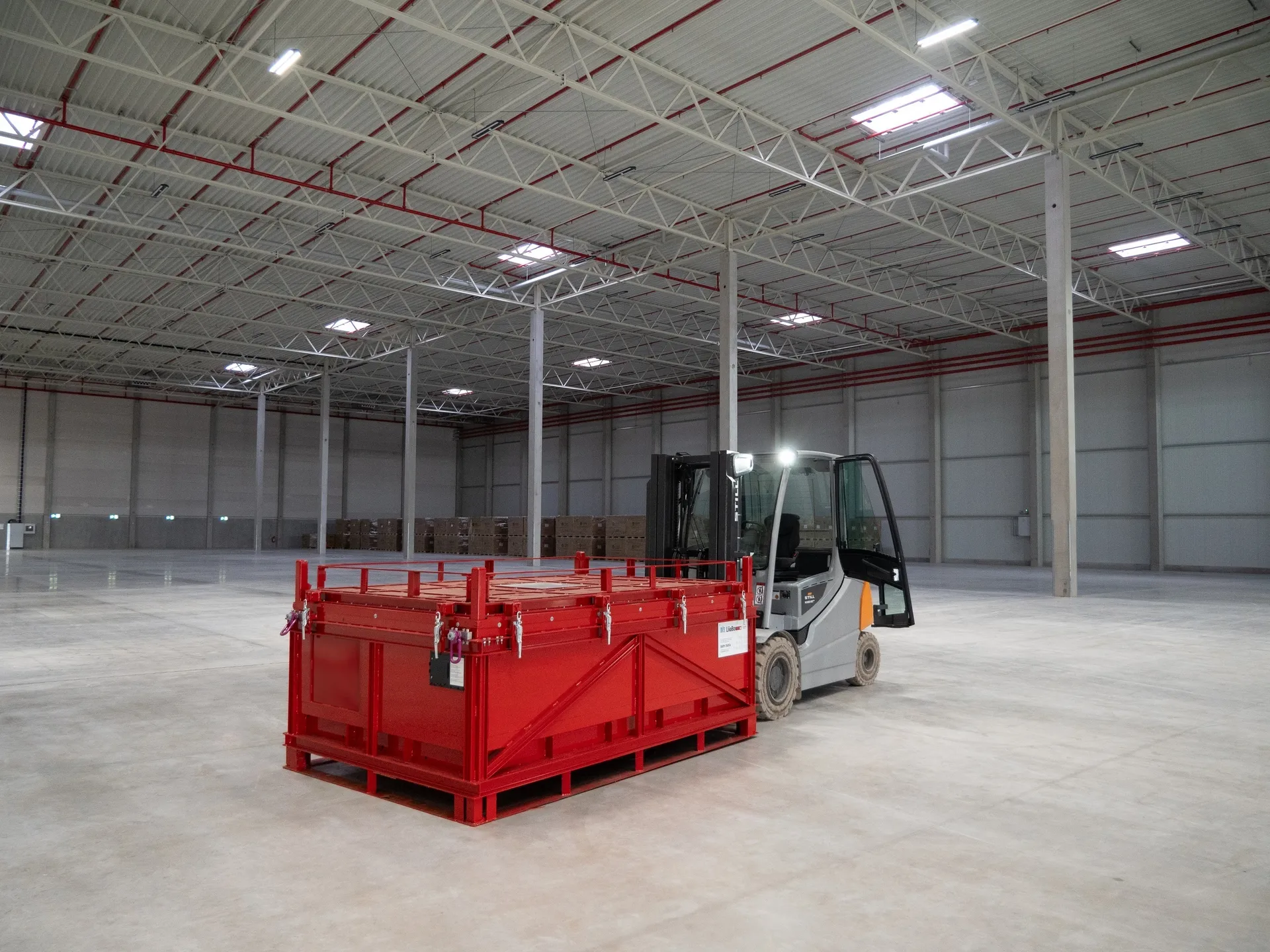
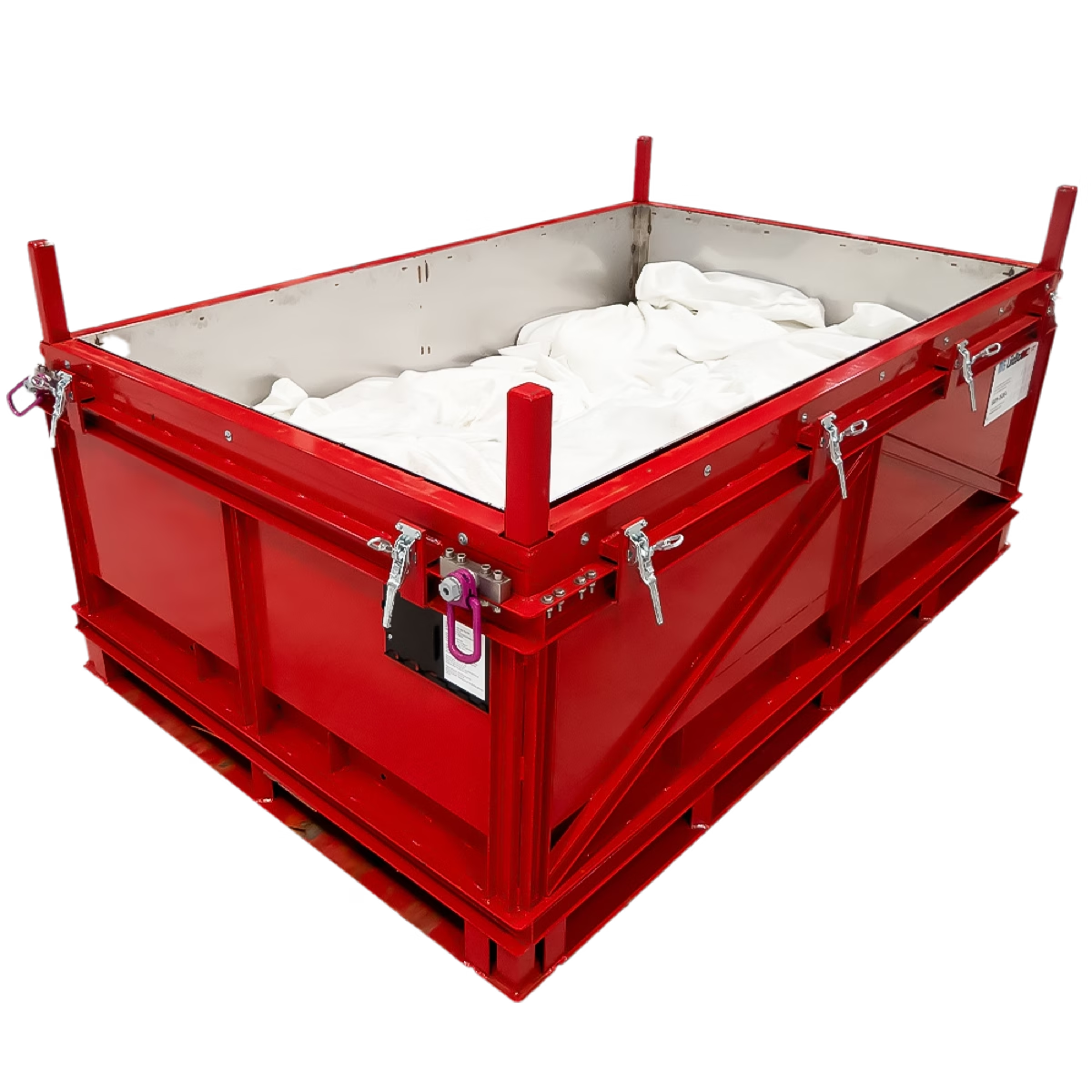
Only a carrier that can package and transport damaged lithium batteries under ADR special provision 376 may collect them. The European Battery Hub arranges collection and transport through a specialized partner; classification as dangerous goods remains with the consignor. Damaged or defective batteries go into packaging under P908 or LP904, critically defective ones into packaging under P911 or LP906; they are prohibited in air freight. Transport complies with ADR, and critically defective batteries travel in the battery containment box (Liio-Box) with BAM specification 15854; which destination countries are possible, we clarify with your request. For waste batteries, the partner holds the permit for waste transport.
Read more: Emergency response plan, Defective batteries (DDLB)
We need to replace our current lithium battery storage. Is there a provider that handles clearing, transport and new storage together?
Yes. The European Battery Hub handles such a switch as an orderly relocation from a single provider. Before the move, you as the consignor classify the stock: intact batteries travel as UN 3480 or UN 3481 under ADR, damaged ones under special provision 376 in approved packaging, and unusable ones go to recycling as waste. Intact batteries then move by ADR transport, with inspection at goods receipt and storage in the hazardous materials warehouse. Critical cells go into battery containment boxes with BAM specification 15854, and we arrange the collection and transport of damaged and waste batteries through a specialized partner; we do not store them.
Read more: Inbound inspection gate, Reverse logistics and second life
We import lithium batteries from China. What needs to be settled before the first delivery?
Dangerous goods documents, the customs procedure and producer registration. The supplier must provide the UN 38.3 test summary; without it, carriers usually refuse the shipment. Non-Union goods must be placed under a customs procedure or re-exported within 90 days of being presented to customs; in a customs warehouse they can stay without time limit and without import duties. Anyone making batteries available in Germany for the first time must first register as a producer with the national register Stiftung EAR. The EBH is connected to the ARA ports, Hamburg and Duisburg and operates a temporary storage facility; if needed, we apply for a bonded warehouse, with 2 to 3 months of lead time.
Read more: Customs clearance and bonded warehouse, UN 38.3, EU Battery Regulation
Who is responsible if lithium batteries are misclassified or packed incorrectly: we as the shipper or the logistics provider?
Both, each in their own role. Under the German dangerous goods ordinance GGVSEB, responsibility is shared among several parties and does not pass entirely to the logistics provider with the order. Whoever instructs a consignor must provide the dangerous goods details in writing or electronically (Section 17 GGVSEB). The consignor must make sure the goods are classified under ADR and must hand over a transport document (Section 18 GGVSEB). Packers, loaders and carriers have their own duties too; a key basis is the manufacturer's UN 38.3 test summary. The EBH transports with its own ADR fleet and staff trained for ADR transport.
Read more: Dangerous goods transport under ADR
Do the same rules apply to LFP (lithium iron phosphate) batteries as to other lithium-ion batteries?
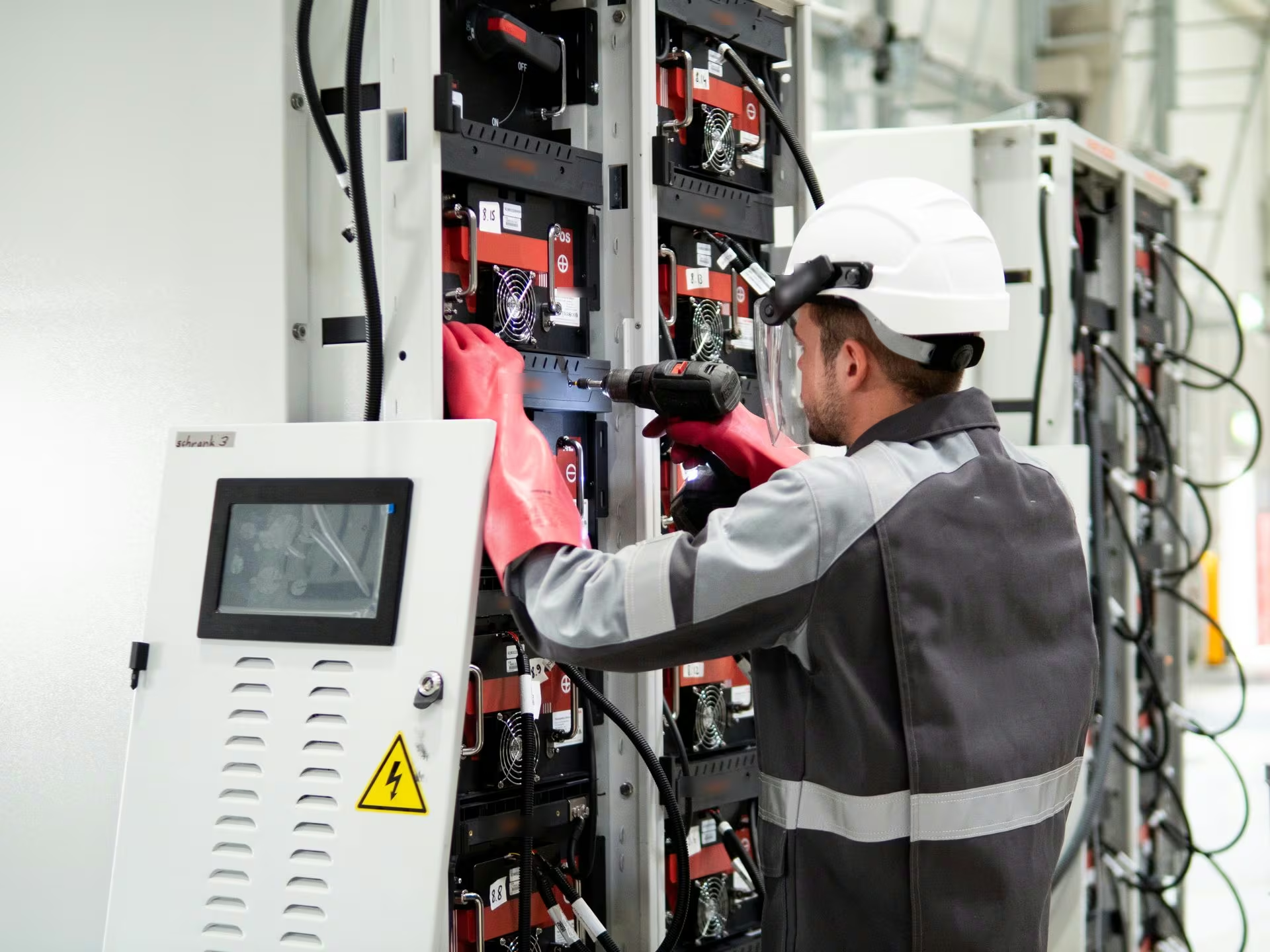
Yes. Under dangerous goods law, LFP batteries are lithium-ion batteries and are transported as UN 3480 or UN 3481 in class 9. The same watt-hour limits, the UN 38.3 testing requirement and the same packaging rules apply. Chemically, LFP is considered more stable than other cell chemistries, but thermal runaway of individual cells cannot be ruled out, and flammable and toxic gases can be released. At the EBH, the same safety levels therefore apply to all cell chemistries: a temperature check at goods receipt, a fire alarm system, gas detection and a round-the-clock thermal imaging check in the warehouse.
Read more: Energy storage and BESS, Thermal runaway
Can we ship lithium-ion batteries by air freight, and what applies to the state of charge?
Yes, but only at a limited state of charge. Lithium-ion batteries shipped on their own (UN 3480, IATA packing instruction 965) may be charged to no more than 30 percent of their rated capacity and, without special approval, may only fly on cargo aircraft. Since January 1, 2026, the 30 percent limit also applies to lithium-ion batteries above 2.7 Wh packed with equipment (UN 3481, packing instruction 966). Damaged or defective batteries are prohibited in air freight. For longer storage, a low state of charge alone is not a solution, because deep discharge damages the cells; the EBH therefore keeps stored batteries in the optimal voltage range using charging stations for each battery type.
Read more: Lithium battery maintenance, Sea freight and overseas
What does battery logistics cost?
There is no flat rate. Costs depend on quantity and energy content, the condition of the batteries (intact, damaged or critically defective) and the packaging this requires, storage duration, mode of transport and destination country, and whether customs clearance is needed. That is why we prepare an individual quote instead of a price list; after your request, your contact person will get back to you within 24 hours on business days.
Read more: Request a quote, Customs clearance