Contact
Energy stored. Future delivered.

Battery Logistics Case Studies

Battery logistics case studies: six projects showing how we store and transport lithium-ion batteries for manufacturers and importers.

At a glance

One set of building blocks. Every case different.

The battery logistics case studies of the European Battery Hub (EBH) in Paderborn, Germany, are based on real projects: distribution, storage projects, transporting damaged batteries to the recycler, supplying a service network and import. The largest of the six projects, 420 battery storage systems in two months, comes first. Each case study shows which building blocks from storage, ADR transport and recycling transport we combined. We do not name customers, for confidentiality reasons.

In practice

Six cases, six industries.

All cases

All battery logistics case studies at a glance

Choose the case closest to your own task. Each case study shows the initial situation, the solution and the benefit.

Heavy-duty forklift in a hall of the European Battery Hub in Paderborn
Battery storage systems
420
Weight per system
8.5 t
Truckloads
210
to store everything
2 months
Customer project: Large-scale storage & project logistics

420 battery storage systems stored in just two months

Customer project from 2025

The European Battery Hub stored 420 battery storage systems weighing 8.5 tonnes each for a customer within two months and coordinated 210 truckloads to do so.

Initial situation

A customer needed secure storage at short notice for 420 battery storage systems weighing 8.5 tonnes each. High unit weights, safety requirements and a tight schedule made the project demanding.

Our solution
  • Detailed project planning with clearly defined processes
  • Coordination and handling of 210 truckloads
  • Handling with our heavy-duty forklift
  • Storage of all systems in Terminal 3 of the European Battery Hub
Result

Within two months, all 420 battery storage systems were stored safely, smoothly and on schedule.

Planning a similar project?Talk to us about quantities, weights and schedule.

Request a quote
Case 2 of 6Back to overview
High-bay warehouse for lithium-ion batteries at the European Battery Hub in Paderborn
Case study: Battery manufacturers

From the production site to the European market

How a battery manufacturer centralizes its European distribution

The European Battery Hub stores a battery manufacturer's batteries centrally in Paderborn, manages stock and call-offs, and from there supplies customers in several European countries with ADR-compliant transport.

Initial situation

A battery manufacturer supplies customers in several European countries. Production runs in large batches, while customer demand and call-offs fluctuate. In-house storage space is tight, and coordinating every shipment individually takes a lot of effort.

The EBH solution
  • Central interim storage of the lithium-ion batteries in Paderborn
  • Inventory management and call-offs as needed
  • Consolidated shipments and ADR-compliant transport
  • European distribution through the existing logistics network
Customer benefit

More flexibility in inventory planning, one central logistics partner and supply to European customers that grows with demand.

Want to simplify battery distribution in Europe?Talk to us about your storage and transport requirements.

Request a quote
Case 3 of 6Back to overview
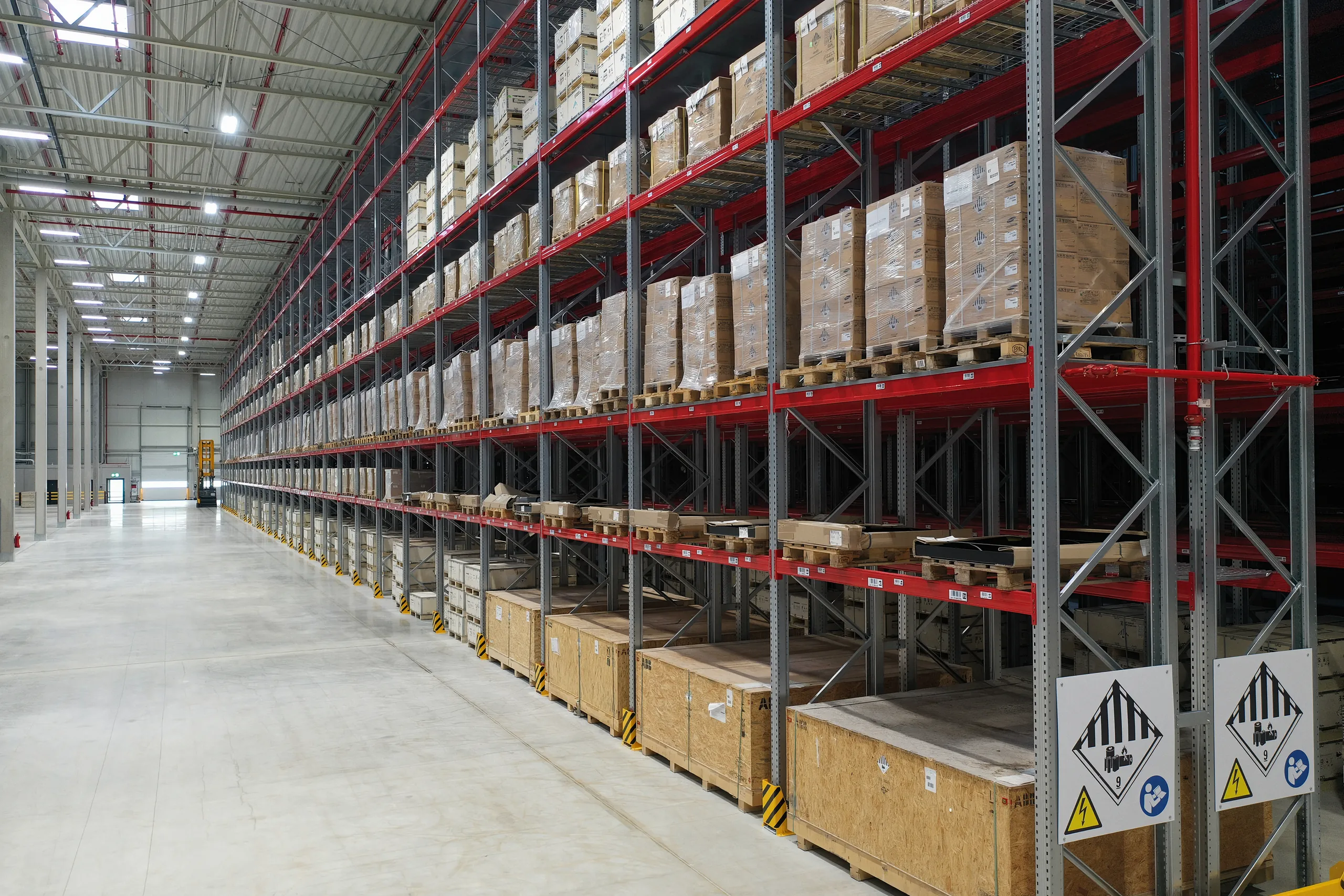
Rack aisle with a forklift in the warehouse of the European Battery Hub in Paderborn
Case study: Energy storage

Many suppliers, one site delivery date

How a system integrator organizes project logistics for battery storage

For a provider of stationary energy storage, the European Battery Hub consolidates components from several suppliers, stores the batteries safely in between and delivers on the agreed date for each project.

Initial situation

A provider of stationary energy storage runs several projects in parallel. Battery modules, inverters and other components come from different suppliers. The construction sites, however, can only accept the goods on fixed dates.

The EBH solution
  • Consolidation of inbound components
  • Safe interim storage of the batteries
  • Stock allocated per project and order picking as agreed
  • Scheduled delivery to installation and project sites
Customer benefit

Delivery dates are easier to coordinate, the organizational effort goes down, and battery logistics runs through one central interface.

Running storage projects and need flexible logistics capacity?Plan your project logistics with the EBH.

Request a quote

Also from the storage sector: 420 battery storage systems stored in two months.

Case 4 of 6Back to overview
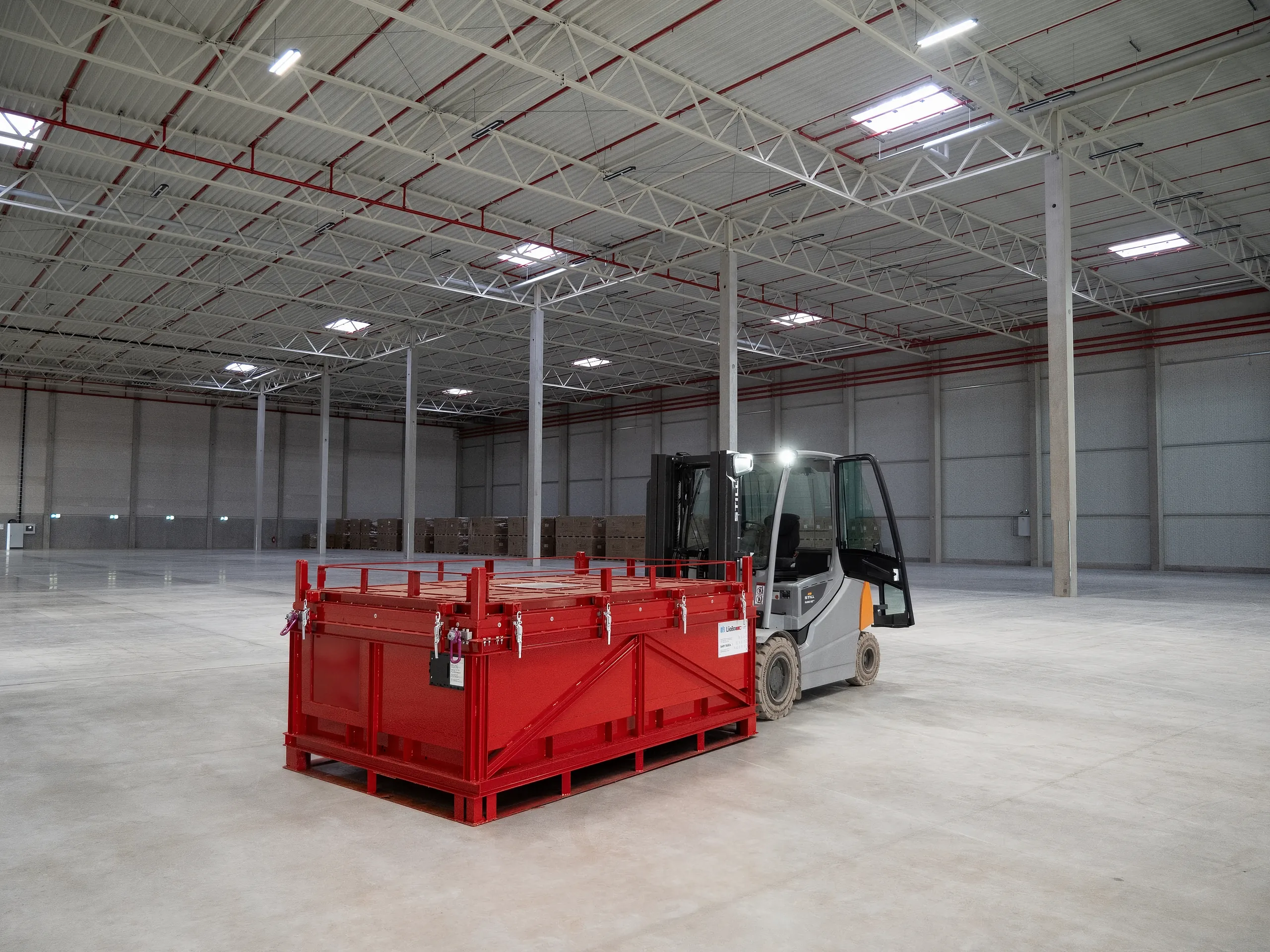
Red battery containment box (Liio box) with forklift in the hall of the European Battery Hub
Case study: Recycling & used battery transport

Safe routes for batteries at the end of their life cycle

How a manufacturer of electrical and automation technology gets used batteries safely to the recycler

For a manufacturer of electrical and automation technology, the European Battery Hub organizes the transport of used and damaged batteries to the recycler: from suitable transport containers through pickup by our partner to the certificate of disposal.

Initial situation

A manufacturer of electrical and automation technology has to take back used, rejected or damaged batteries from different regions and send them for recycling. Depending on their condition, different requirements apply to packaging, transport and recovery.

The EBH solution
  • Delivery of suitable transport containers to the customer
  • Transport eligibility check based on battery condition and applicable regulations
  • ADR transport directly to the recycler by our partner with a transport permit under Section 54 KrWG
  • Recycling at the recycling plant including a certificate of disposal
Customer benefit

Clearly defined processes, one point of contact for transport to the recycler and fewer interfaces between senders, carriers and recycling companies.

Good to know

We check in every individual case whether a battery can be transported. Used, damaged and waste batteries go directly to the recycler and are not stored in Paderborn.

Looking for a partner to transport waste batteries to the recycler?Discuss your use case with our team.

Request a quote
Case 5 of 6Back to overview
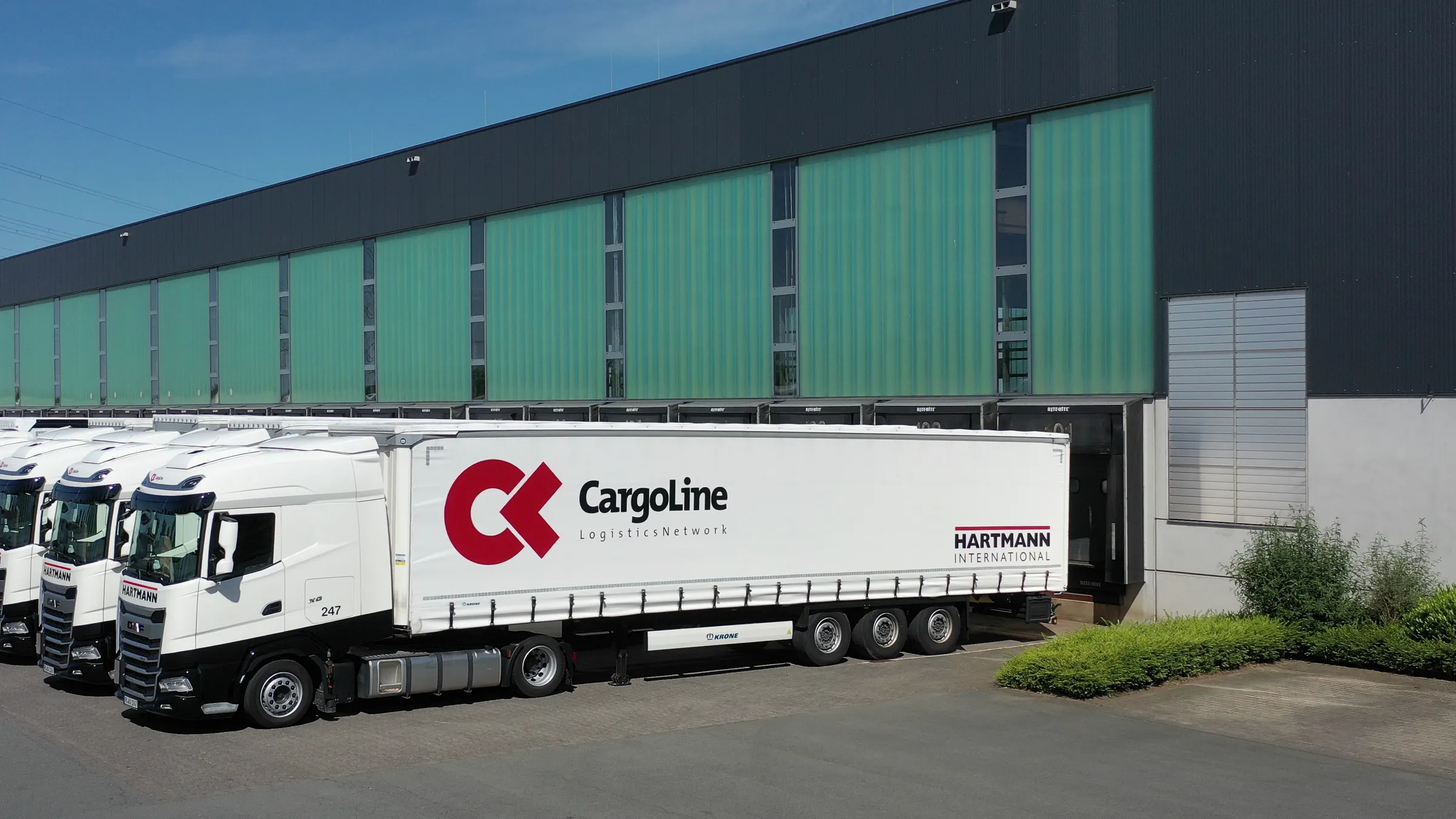
Truck with CargoLine body in front of the loading docks of the European Battery Hub
Case study: Electric industrial vehicles

Batteries and spare parts for a connected service chain

How a provider of electric industrial vehicles secures supply to its service partners

For a provider of electric industrial vehicles, the European Battery Hub supplies workshops and service partners with replacement batteries and components from central stock and organizes the transport of batteries due for replacement directly to the agreed destination in an agreed process.

Initial situation

A provider of electric industrial vehicles has to supply its workshops and service partners reliably with replacement batteries and components. At the same time, the availability of many different items is to be managed centrally.

The EBH solution
  • Centralization of the relevant stock
  • Provision and shipping preparation as needed
  • Coordination of transport to workshops and service points
  • Transport of batteries due for replacement directly to the agreed destination in an agreed process
Customer benefit

More predictable spare parts supply, consistent logistics processes and one central point of contact for all transport around the battery.

Want to simplify battery and spare parts logistics?Develop the right solution for your service network with the EBH.

Request a quote
Case 6 of 6Back to overview
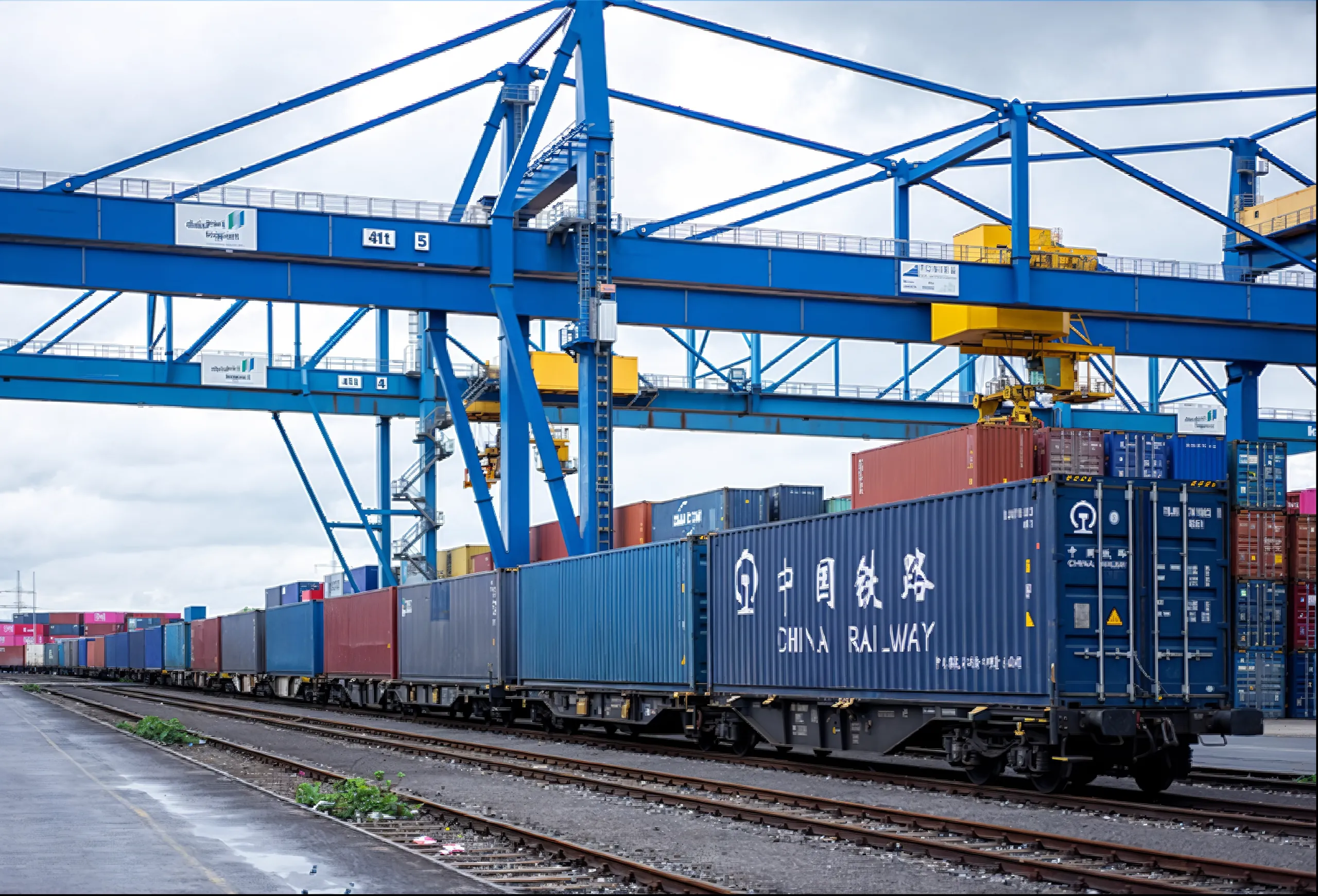
Container train in the port of Duisburg, connecting the European Battery Hub to seaports and rail
Case study: Import & international supply chain

From the seaport to Europe-wide distribution

How an international importer consolidates its battery supply chain

For an importer, the European Battery Hub combines delivery from international production sites, customs clearance, safe interim storage and onward distribution to customers in Europe at a single interface.

Initial situation

An importer sources batteries from international production sites. Arrivals by ship or rail have to be coordinated with customs clearance, storage capacity and onward distribution to customers in Europe.

The EBH solution
  • Coordination of delivery to the logistics site and customs clearance
  • Safe interim storage in line with product and dangerous goods requirements
  • Coordination of stock and delivery call-offs
  • Organization of onward distribution within Europe
Customer benefit

One central interface for customs, storage and distribution, more leeway between import and customer call-off, and better consolidated transport.

Location advantage

Paderborn lies on the A33 motorway with fast connections to the A2 and A44. The seaports of Hamburg, Antwerp, Rotterdam and Amsterdam and the inland port of Duisburg are within easy reach, backed by a Europe-wide transport network.

Importing batteries into Europe?Find out with us how a central storage and distribution solution can support your supply chain.

Request a quote
The building blocks

Which building blocks each case uses

All six projects draw on the same set of building blocks. The overview shows which of them were used in the solution described.

Which service modules of the European Battery Hub were used in which case study
Case studyPickup & deliveryCustoms clearancePackaging by conditionInterim storageStock & call-offsOrder pickingTransport & distributionUsed battery transport
Customer project 2025420 battery storage systems storedPart of the solutionnot mentionednot mentionedPart of the solutionnot mentionednot mentionednot mentionednot mentioned
Battery manufacturersFrom the production site to the European marketnot mentionednot mentionednot mentionedPart of the solutionPart of the solutionnot mentionedPart of the solutionnot mentioned
Energy storageMany suppliers, one site delivery datePart of the solutionnot mentionednot mentionedPart of the solutionPart of the solutionPart of the solutionPart of the solutionnot mentioned
RecyclingSafe routes for batteries at the end of their life cyclePart of the solutionnot mentionedPart of the solutionnot mentionednot mentionednot mentionedPart of the solutionPart of the solution
Industrial vehiclesBatteries and spare parts for a connected service chainnot mentionednot mentionednot mentionedPart of the solutionPart of the solutionPart of the solutionPart of the solutionPart of the solution
Import & supply chainFrom the seaport to Europe-wide distributionPart of the solutionPart of the solutionnot mentionedPart of the solutionPart of the solutionnot mentionedPart of the solutionnot mentioned

How to read the table: a red square marks the building blocks named in the case description. A gray dot only means that the building block does not appear in this description. Click a case to open the full case study.

All from one source

The battery logistics chain at a glance

Certified storage

Certified storage of lithium-ion batteries in a hazardous materials warehouse designed for WGK 3 and ADR class 9 (M4): 20,300 m² with 45,000 storage spaces.

Right for you if you want to store lithium-ion batteries safely and insurably, in a new building planned specifically for hazardous materials.

  • FM Global sprinkler system for hazardous materials
  • Firefighting water tank holding around 1 million liters
  • Fire water barrier
  • KfW 40 new build with no more than 40% of a reference building’s primary energy demand
To the battery warehouse
Area
20,300 m²
Storage positions
45,000
Water hazard class
WGK 3
Dangerous goods
Class 9 (M4)

Dangerous goods transport (ADR)

ADR transport of class 9 lithium-ion batteries to more than 40 countries, with trained staff; classification as UN 3480 or UN 3481 is done by the consignor.

Right for you if your batteries have to be moved as dangerous goods under ADR, within Germany or to one of more than 40 countries.

  • Own ADR fleet
  • Staff trained specifically for ADR transport
  • 5-tonne forklift on board to set down containment boxes at your site
  • Storage, customs and transport with one point of contact
To dangerous goods transport
Reach
more than 40 countries
Dangerous goods
Class 9 under ADR
Classification
UN 3480 / UN 3481
Test basis
UN 38.3

Customs service

Customs temporary storage for up to 90 days; if needed, we apply for a bonded warehouse with no time limit, with 2 to 3 months of lead time. On re-export from the bonded warehouse, for example to Switzerland, duties are waived.

Right for you if your batteries come from a non-EU country and it is not yet decided whether they stay in the EU or travel on.

  • Efficient customs clearance inland, without waiting times at the port
  • Duties deferred instead of due immediately
  • Individual client solutions
To the customs service
Temporary storage
up to 90 days
Bonded warehouse
on application
Re-export
duties waived

Emergency response plan & containment box

A clear emergency process for critical and defective batteries: the battery containment box (Liio-Box) is covered by BAM specification 15854 and withstands up to 1,240 °C inside while the outside stays at a maximum of 52 °C.

Right for you if batteries are damaged, defective or critical and have to be safely enclosed in the containment box or transported.

  • Stainless steel tray catches leaking electrolyte
  • Lockable on all sides, forkliftable and stackable
  • Reusable for storage and transport
  • Mobile: we bring the box to your site
To the emergency response plan
Specification
BAM 15854
Inside
up to 1,240 °C
Outside
max. 52 °C

Inbound inspection & monitoring

At the inbound inspection gate, batteries pass a temperature check, and oversized goods go through their own goods receipt processes; in the warehouse, a thermal imaging drone checks the stock around the clock.

Right for you if you want the condition of your batteries documented without gaps from arrival to dispatch.

  • Only undamaged batteries go into storage
  • Cameras and sensors record item number, temperature, volume and condition
  • Round-the-clock thermal imaging, fire alarm system and gas detection
  • Digital twin for target/actual stock reconciliation
To the inbound inspection gate
Inspection
temperature and condition
Monitoring
24/7 by drone
Stock
digital twin
Transparency
data in the customer portal

Reverse logistics & second life

Transport to recycling or into a second life, arranged through a specialized partner, directly from your site and without interim storage in Paderborn.

Right for you if used or defective batteries need to go to recycling or into a second life.

  • Collection at your site, packed to ADR standards
  • Directly to the recycler or into second-life use
  • Recycling via our partner's recycling and disposal network
To reverse logistics
Transport
via a specialized partner
Standards
DIN EN ISO 9001 and 14001
Contacts

Your contacts

Talk directly to our team about your case. We respond within 24 hours on business days.

FAQ

Frequently asked questions about our projects

Are the European Battery Hub case studies real projects?

Yes. All case studies are based on projects that the European Battery Hub in Paderborn has actually carried out. They include a customer project from 2025: 420 battery storage systems weighing 8.5 tonnes each, stored within two months. For confidentiality reasons we do not name customers. The initial situation, solution and benefit reflect the core of each project.

In which industries has the European Battery Hub already delivered battery logistics?

The case studies show projects for battery manufacturers, system integrators of stationary energy storage, companies that need recycling, providers of electric industrial vehicles and international importers. All projects draw on the same set of building blocks from storage, ADR transport and recycling transport, which we put together to suit each task.

Does the EBH also take care of used or damaged batteries?

Yes, as transport. We do not store used, damaged or waste batteries in Paderborn or bring them back there. We organize suitable packaging and arrange transport directly to the recycling or treatment plant through a specialized partner with a permit for waste transport. For critical cases, the European Battery Hub uses the battery containment box with BAM specification 15854.

What project sizes can the European Battery Hub handle?

A customer project from 2025 shows the scale: 420 battery storage systems weighing 8.5 tonnes each, 210 truckloads, all stored within two months. The EBH hazardous materials warehouse offers 20,300 m² of space with 45,000 storage spaces. Behind it are 165,000 m² of warehouse space at Hartmann International, which dispatches 400 vehicles a day.

How does the EBH support importers of batteries from overseas?

We coordinate delivery by ship or rail, store the batteries in line with product and dangerous goods requirements, align stock and call-offs and organize onward distribution within Europe. For goods not yet cleared through customs, temporary storage for up to 90 days is available; if needed, we apply for a customs warehouse with no time limit.

How does working with the EBH begin?

With a no-obligation first conversation. We clarify battery types, quantities, condition, time frame and destination countries and develop a concept for storage or transport. We respond to inquiries within 24 hours on business days.

Let's talk about your case.

Distribution, storage project, recycling transport, service network or import: tell us about your task. We will develop a concept and respond within 24 hours on business days.

ADR Class 9 DIN EN ISO 9001 DIN EN ISO 14001 BAM 15854

Response
within 24 hours on business days