
Marcel Niebuhr
Head of Business Development

Sustainable battery logistics in Paderborn: your lithium-ion batteries are stored in a KfW-40 building with heat pumps and photovoltaics.
Sustainable battery logistics means storing and transporting lithium-ion batteries with as little energy as possible and returning them to the materials loop at the end of their use. The European Battery Hub (EBH) in Paderborn does this in a KfW-40 building with no more than 40% of the primary energy demand of a reference building under the German Building Energy Act (GEG); a specialized partner takes end-of-life batteries directly to recycling.
As a KfW 40 building, the European Battery Hub needs no more than 40% of the primary energy demand of a comparable reference building under the German Buildings Energy Act (GEG).
Reference building under the GEG100%
European Battery Hub, KfW 40100%
We built the European Battery Hub from the ground up as a hazardous materials warehouse for lithium-ion battery logistics and designed it for efficiency. As a KfW-40 building, it needs no more than 40% of the primary energy demand of a comparable reference building under the GEG. The heat comes from air-source heat pumps, and the photovoltaic system on the roof generates part of the electricity. This lowers the operating costs and the CO₂ footprint of storage for good, with no compromise on capacity or safety: the site offers 45,000 storage spaces on 20,300 m². How the Paderborn location also shortens transport routes is explained on the location advantages page. For a tour of the building, watch the European Battery Hub company film.
Choose a topic. The drawing shows how the building saves energy and holds back firewater.
As a KfW-40 building, the EBH needs no more than 40% of the primary energy demand of a comparable reference building under the GEG.
Sealed hall floors and a firewater barrier hold back the firewater so that nothing reaches the soil or groundwater.
Schematic drawing, not to scale
Four measures against which the EBH's sustainability can be checked.
KfW-40 construction with no more than 40% of a reference building's primary energy demand: air-source heat pumps and solar power cut the footprint of every battery in storage.
The fire suppression system meets FM Global standards; sealed hall floors and a firewater barrier hold back the firewater so that nothing reaches the soil or groundwater.
A specialized partner takes end-of-life batteries directly to recycling, with no storage in Paderborn. This keeps valuable raw materials in the loop.
DIN EN ISO 14001 makes sustainability verifiable, not just claimed.
Where possible, used batteries get a second life, for example as stationary energy storage; recycling comes only at the end. The European Battery Hub does not store or inspect used, defective or end-of-life batteries in Paderborn, as they count as waste. We arrange their transport to reuse or recycling through a specialized partner; how we support recycling companies with logistics is shown on the industry page. The closed loop keeps lithium, nickel and cobalt in the economy and reduces the need for new raw materials. More on the reverse logistics & second life page.
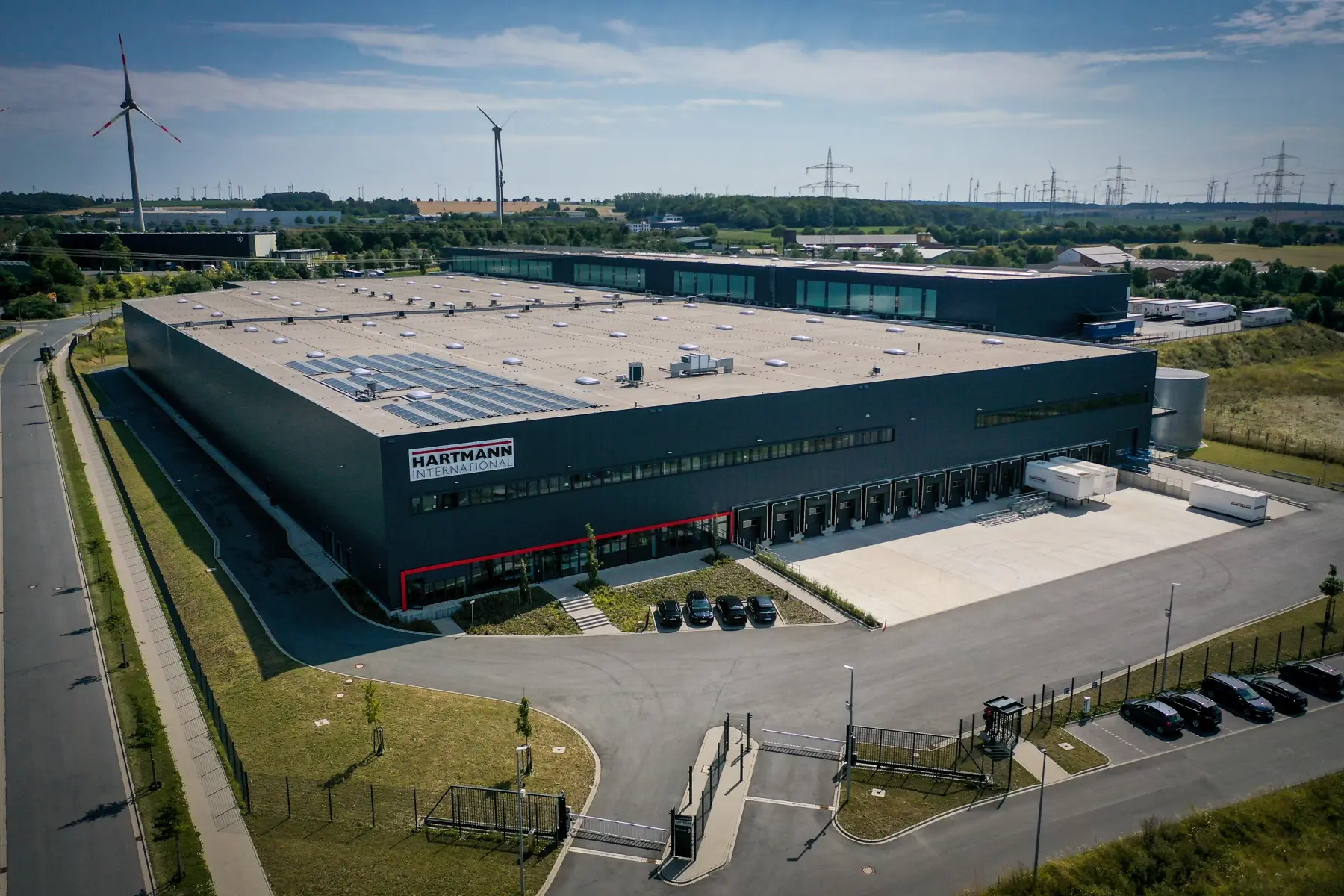
For many companies, logistics falls under Scope 3 in their emissions balance: the indirect emissions along the supply chain. Outsourcing storage and transport to an energy-efficient partner with environmental management can lower this share. The KfW-40 building and environmental management to DIN EN ISO 14001 give your procurement team verifiable arguments; on request, we compile the information for your ESG reporting. For industrial and traction batteries, the digital battery passport under the EU Battery Regulation also contains carbon footprint data. We introduce the company behind the European Battery Hub on the about Hartmann International page.
Every sustainability statement on this page rests on a standard, an approval or the building standard.
Talk directly with our business development team.
We will get back to you within 24 hours on business days.
Head of Business Development

Business Development Manager

Business Development Manager
Sustainable battery logistics means storing and transporting lithium-ion batteries with the lowest possible energy use and returning them to a closed materials loop after use. It can be checked on three points: the building standard of the warehouse, the provider's environmental management and the routes for end-of-life batteries. At the European Battery Hub, these are the KfW-40 building, DIN EN ISO 14001 and the transport of end-of-life batteries directly to recycling through a specialized partner.
Read more: Reverse logistics and second life
A KfW-40 building needs no more than 40% of the primary energy demand of a comparable reference building under the German Building Energy Act (GEG). At the European Battery Hub, air-source heat pumps provide the heat instead of fossil heating, and a photovoltaic system on the roof generates part of the electricity. For you, this means a smaller CO₂ footprint for storage, with no compromise on capacity (20,300 m², 45,000 storage spaces) or safety.
The firewater stays inside the building: the hall floors are sealed, and a firewater barrier holds it back so that contaminated water does not reach the soil or groundwater. The sprinkler system works to FM Global standards and draws on a firewater tank holding around 1 million liters.
Read more: Emergency response plan
Second life extends the service life of a battery before it is recycled, for example as stationary energy storage. This keeps raw materials such as lithium, nickel and cobalt in the economy for longer and lowers the demand for new material. The European Battery Hub does not store or inspect used or defective batteries in Paderborn; we arrange their transport to reuse or recycling through a specialized partner.
Read more: Reverse logistics and second life
Yes. For most companies, storage and transport fall under the Scope 3 emissions of the supply chain, and an energy-efficient partner with environmental management can lower this share. The KfW-40 building and environmental management to DIN EN ISO 14001 are verifiable evidence for your ESG reporting. On request, we compile the information you need.
Read more: Certifications and standards
Talk to our team about sustainable battery logistics. We respond within 24 hours on business days.